February 17, 2026
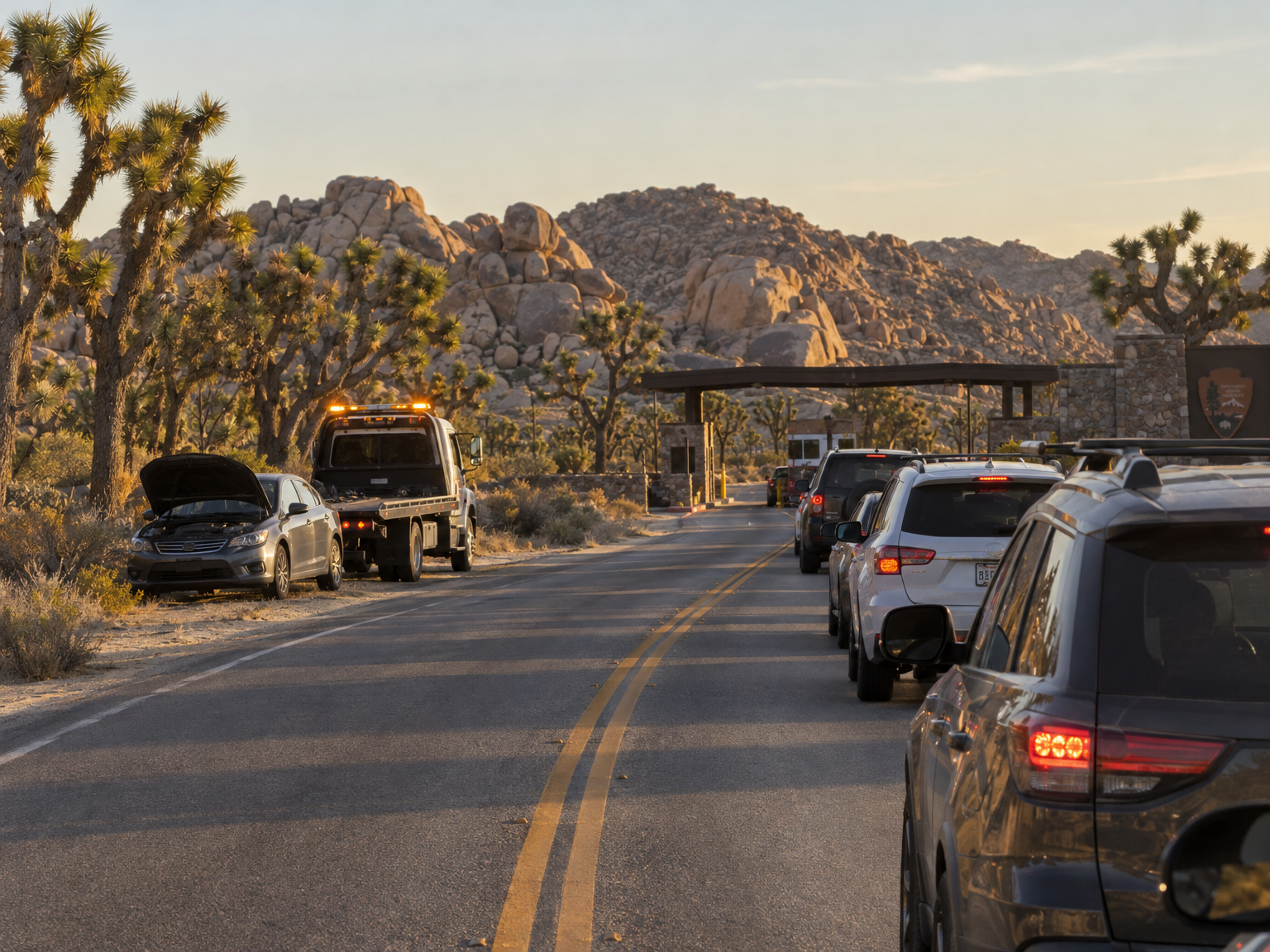
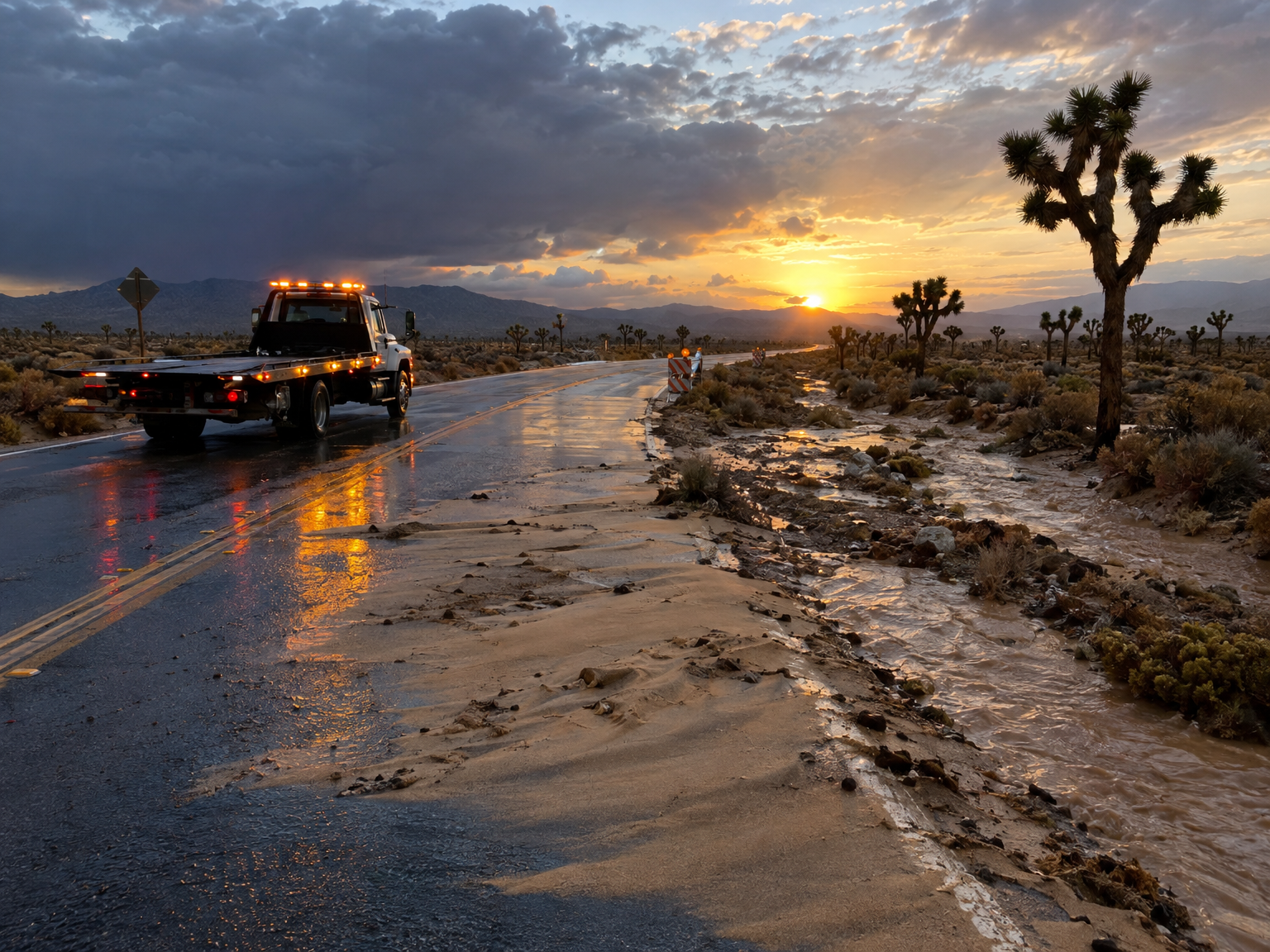
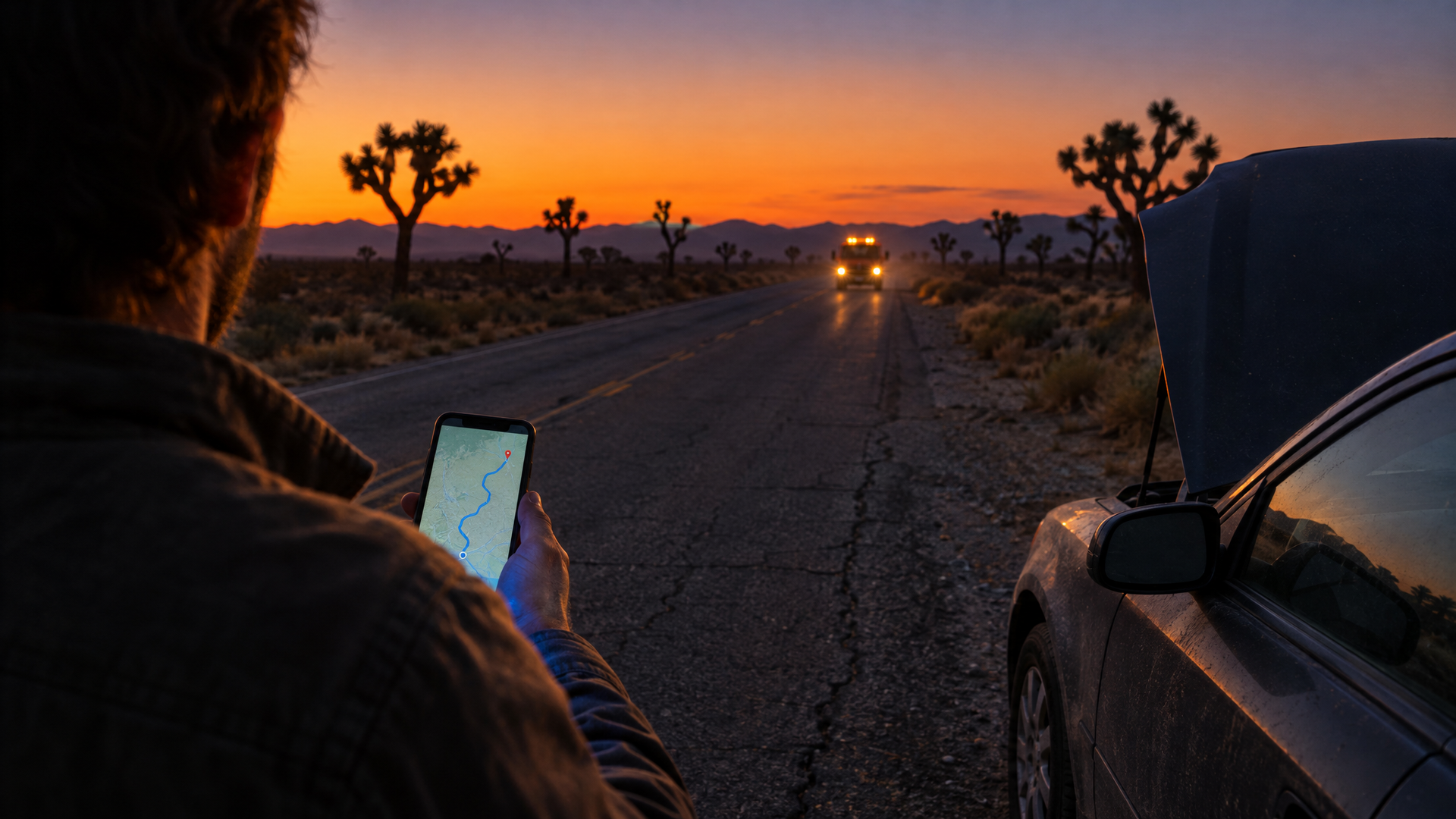
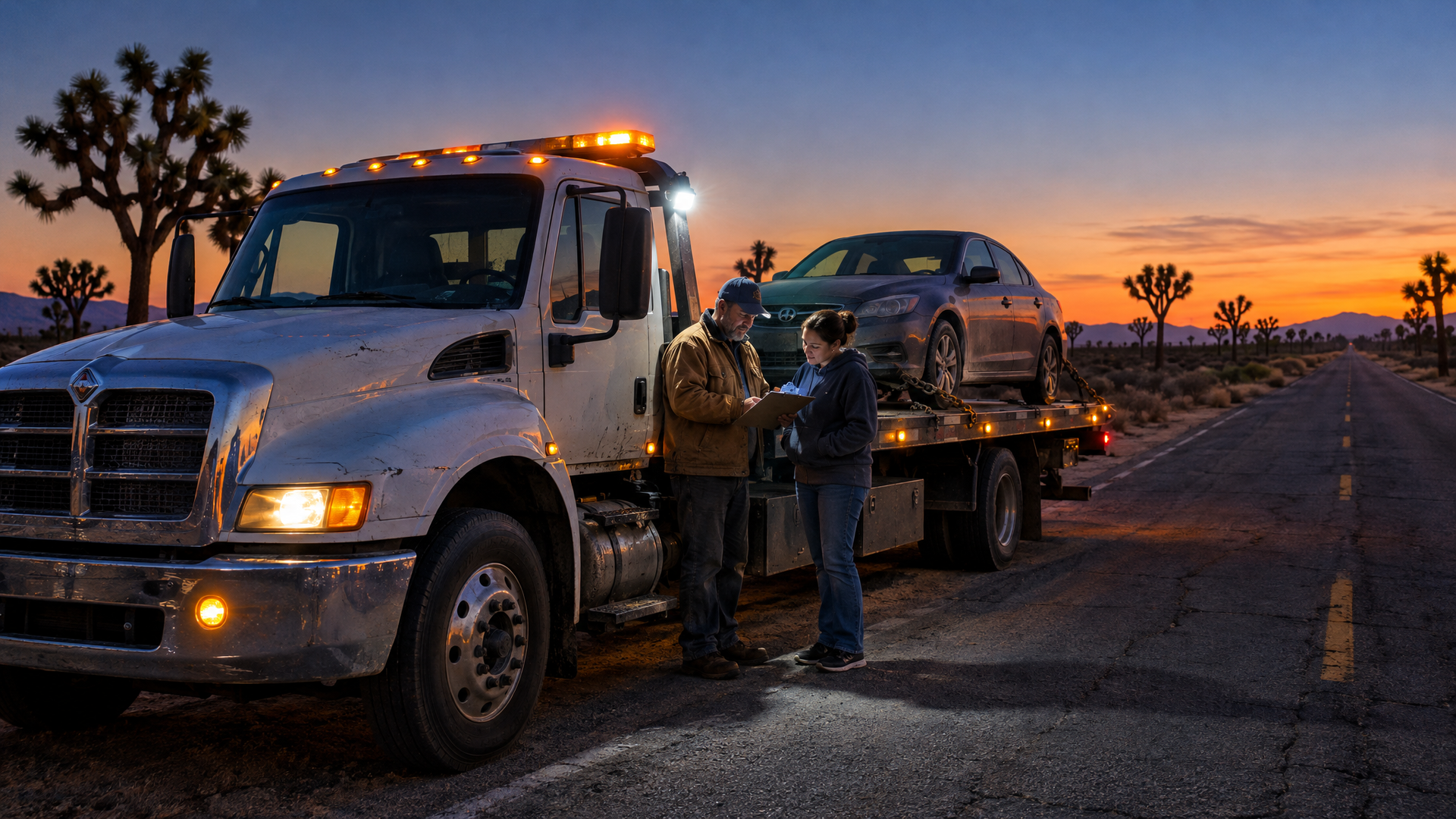
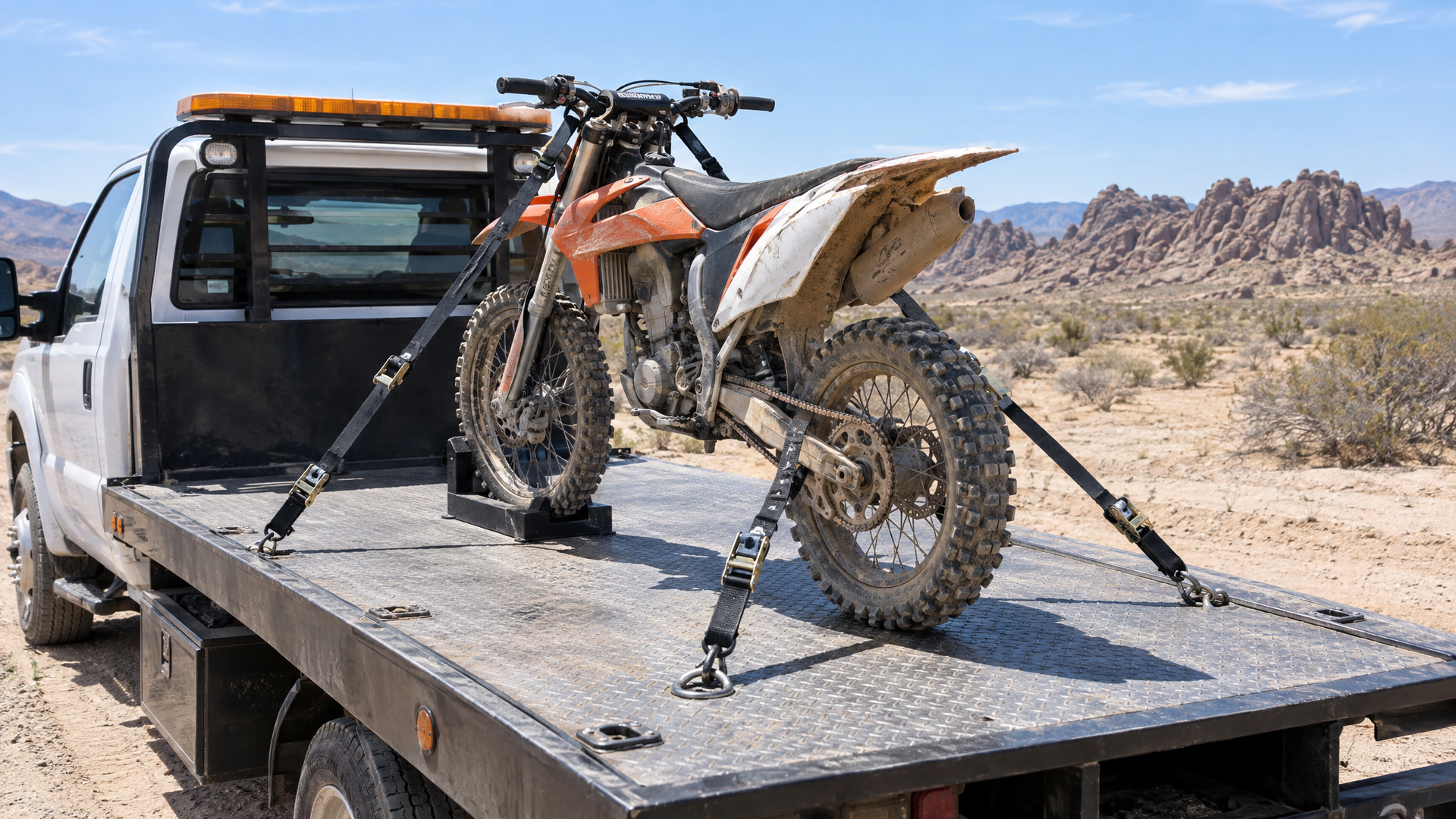
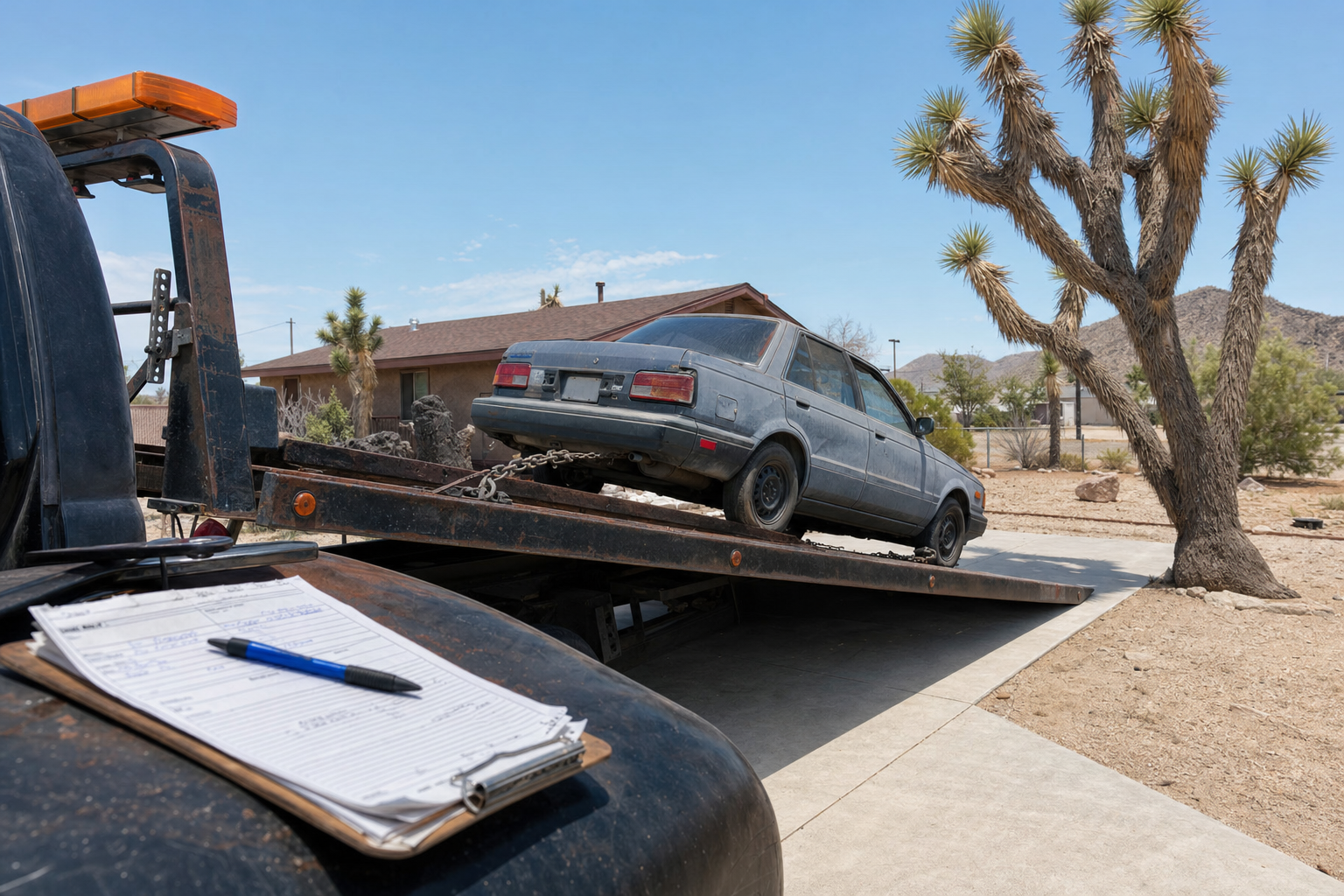
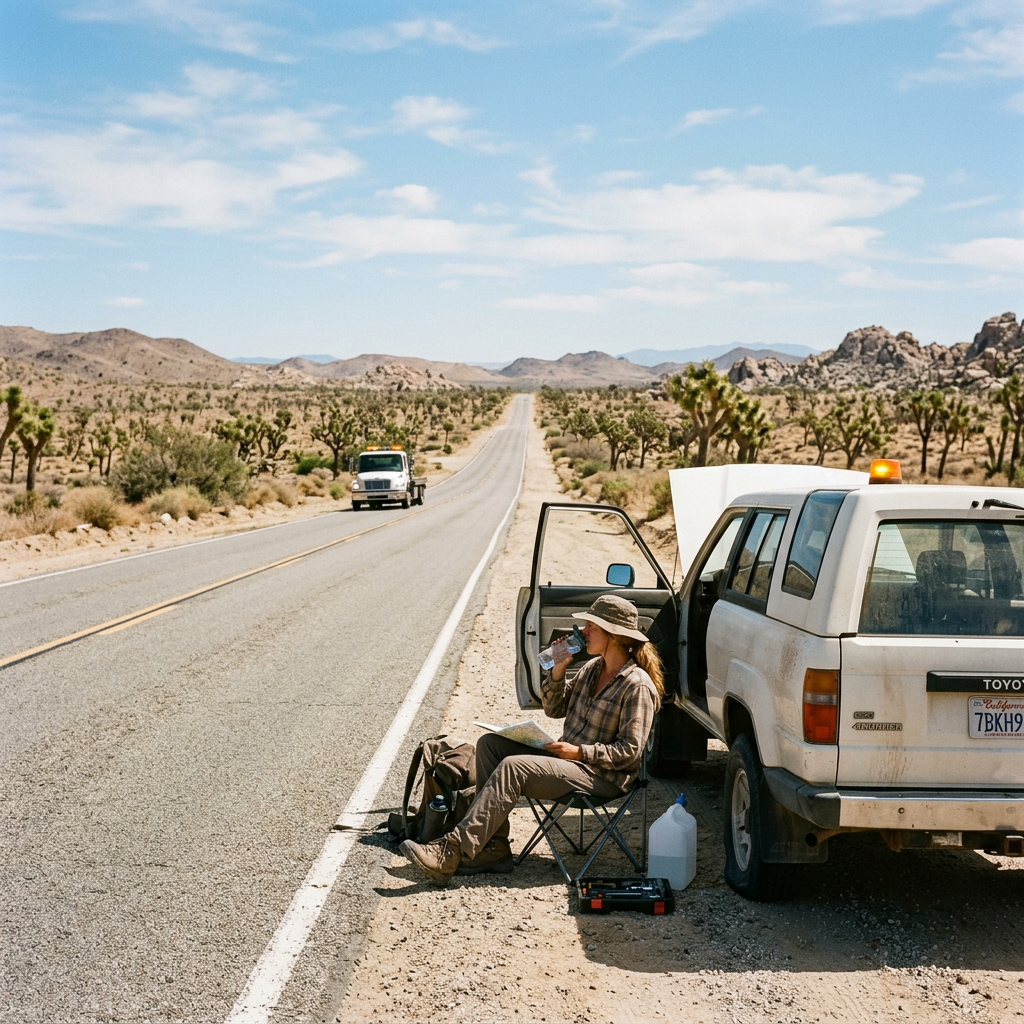
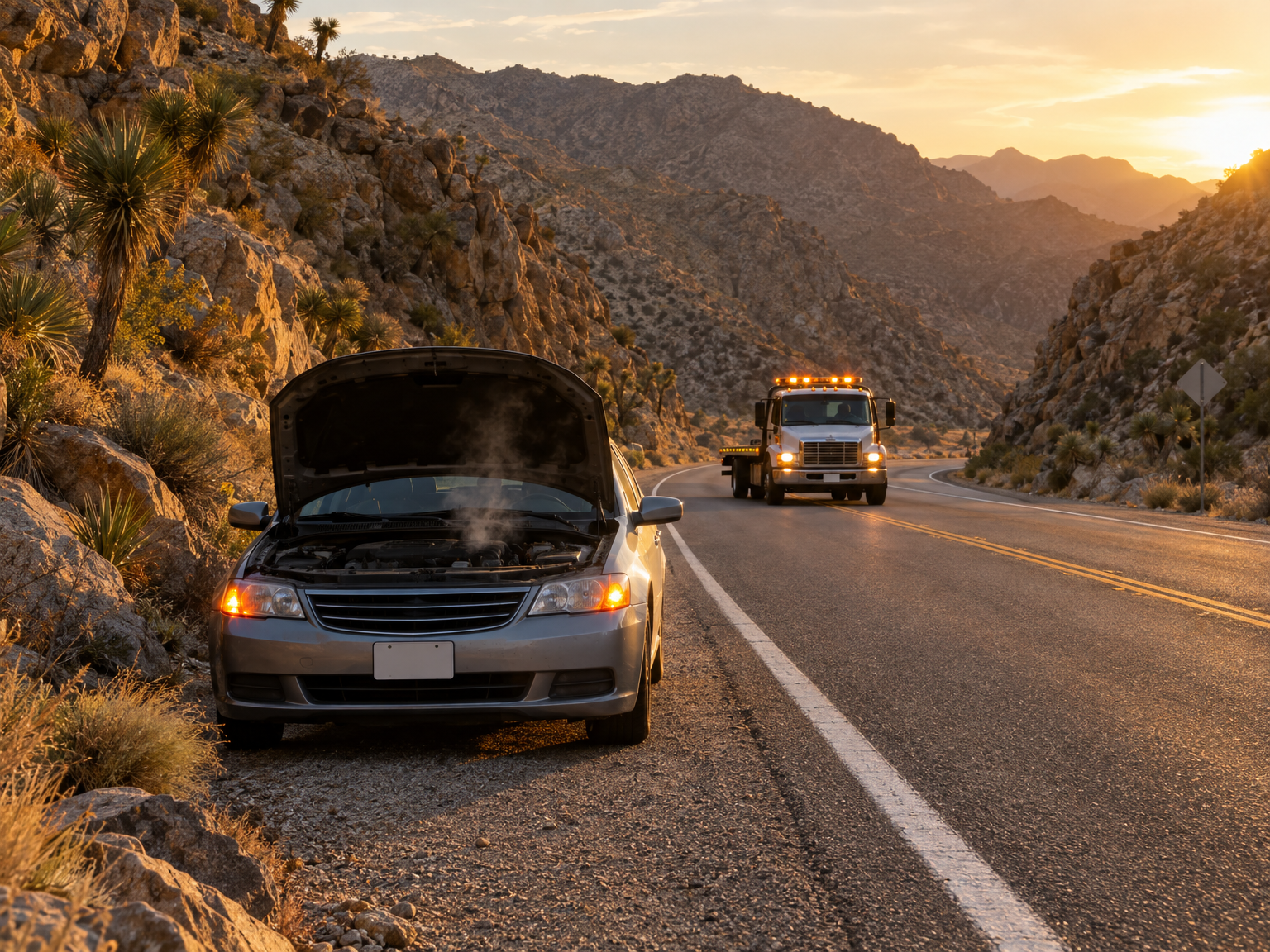
You're on Highway 62, somewhere between the Joshua Tree Park entrance and the 29 Palms city limits. It's 107°F outside. Your car won't start. You have half a bottle of water, your phone is at 22%, and you've just discovered that two of the three towing companies you Googled are national dispatch services that will send someone from Palm Springs in "approximately 90 minutes." This is not a hypothetical. It happens every summer in the Morongo Basin. The Twentynine Palms area is one of the most unforgiving breakdowns environments in California. The desert heat accelerates vehicle failures, the distances are real, cell service drops out on major routes, and the nearest dealer or specialty shop for some vehicles is 30 to 50 miles away in Palm Springs or San Bernardino. Getting the wrong towing company doesn't just inconvenience you — in summer desert conditions, it can become a genuine safety situation. Here's how to make this decision correctly, before you ever need it. 1. The Most Important Question: Are They Actually Local? The Twentynine Palms towing market has a significant problem: national referral services and dispatch aggregators buy local phone numbers and run local-sounding ads, then route your call to whoever is available — which could be a contractor from Coachella Valley, Beaumont, or further. When you're stranded in 110°F heat on a remote stretch of Old Woman Springs Road, a company that's actually in Twentynine Palms will reach you in 20-30 minutes. A company dispatching from an hour away will not. Ask directly when you call: "Where are your trucks located right now? What's your realistic ETA to [your specific location]?" A legitimately local company will give you a specific answer. A dispatch service will give you a vague window or an overly optimistic estimate that doesn't account for the actual drive time across the High Desert. If you can't verify a physical Twentynine Palms address before you need a tow, save a number now from a company you've confirmed is actually based here. 2. Desert Heat Changes the Emergency Calculus — Response Time Is a Safety Issue In most parts of California, waiting 45 minutes for a tow is an inconvenience. In Twentynine Palms in July, it can become dangerous. Heat-related illness progresses quickly at desert temperatures. Heatstroke — the severe end of the spectrum — can develop in less than an hour of sun exposure at extreme temperatures if you're outside a vehicle. Even inside a car with the engine off, interior temperatures can reach 130-150°F within minutes. This is why response time is not just a convenience factor here — it's a safety factor. When evaluating towing companies for this area, look for: Verified local dispatch — not a call center routing to contractors Sub-30-minute response times for Twentynine Palms city limits and realistic ETAs for outlying areas Knowledge of the specific roads you're on — a company that knows the difference between the park entrance on Utah Trail vs. the Pinto Basin Road doesn't need to look anything up What to do while waiting in desert heat: Stay inside the vehicle with the doors closed if your AC battery has any reserve — the insulation keeps interior temps lower than outside If you have to wait outside, find shade from the vehicle rather than standing in direct sun Ration water — do not drink it all immediately Keep your hazard lights on and conserve your phone battery by reducing screen brightness 3. Joshua Tree National Park Breakdowns Require Specific Expertise Joshua Tree National Park receives over 3 million visitors annually. A significant percentage of those visitors break down inside or near the park — on remote roads with no cell service, no shade, and no nearby services. Towing inside or adjacent to the park is more complex than a standard roadside call: Cell service is unreliable to nonexistent throughout most of the park. If you break down near Skull Rock, Cottonwood Springs, or anywhere on Pinto Basin Road, you may need to drive or hike to a location with signal before you can call. Know this before you go: the park visitor center at Oasis of Mara has consistent cell service. The Cholla Cactus Garden and Cottonwood Visitor Center have intermittent service. Park roads are not all paved, and some are only suitable for high-clearance vehicles. A company that regularly works in this area knows which trucks can access which roads and how to safely recover a vehicle from unpaved desert terrain without compounding the damage. If you're planning to visit Joshua Tree National Park, save a local Twentynine Palms towing number before you enter. Once you're in the park's interior, you're too far from cell service to research options — and the decisions you make then will be based entirely on preparation you did earlier. Ask any towing company you're considering: "Do you recover vehicles from inside Joshua Tree National Park? Are you familiar with the Pinto Basin Road and the unpaved routes in the park's southern section?" The answer will tell you quickly whether they actually work in this area. 4. Highway 62 Breakdowns Have Their Own Risk Profile Highway 62 — the Twentynine Palms Highway — is the primary artery connecting the Morongo Basin to the Coachella Valley and beyond. It runs through Morongo Valley, Yucca Valley, Joshua Tree, and Twentynine Palms before continuing to Rice Road toward Vidal Junction. It looks like a regular California highway. It is not treated like one. The reality of Highway 62 breakdowns: Stretches between Morongo Valley and Yucca Valley have minimal shoulder and fast-moving traffic at highway speeds The section between Joshua Tree and Twentynine Palms is remote — there are long gaps between any services Night driving on Highway 62 is legitimately hazardous for someone standing outside a disabled vehicle due to visibility and traffic conditions Cell service drops out in sections, particularly in the canyon approaches between I-10 and Morongo Valley A local towing company that works Highway 62 regularly knows the safest procedure for extracting a vehicle from a specific stretch. They know which sections have adequate shoulder and which require traffic control. They know the quickest access routes from both ends. If you break down on Highway 62: Move as far onto the shoulder as possible and engage your parking brake Turn on hazard lights immediately If you have road flares or reflective triangles, deploy them behind the vehicle Stay inside the vehicle with your seatbelt on if you're on a section with fast traffic Call for help using your best available signal — if you can't get through, drive slowly to the nearest cross street with better signal rather than walking on the shoulder 5. Understand What Military Family Towing Involves The Marine Corps Air Ground Combat Center (MCAGCC) in Twentynine Palms is one of the largest military installations in the world, covering over 930 square miles of training land. Tens of thousands of Marines, sailors, and family members live in and around the base. Military family towing has some specific considerations: Base access and proximity. A towing company that regularly serves the military community at 29 Palms understands that some vehicles may need to be recovered from on-base locations, which requires coordination with base security and appropriate identification. Not every company is familiar with this process. Deployment-related vehicle issues. When Marines deploy for extended periods, their personal vehicles may sit for months. Batteries die, tires go flat from sitting, and rodents occasionally damage wiring. These aren't emergencies in the traditional sense, but they need to be handled correctly — especially when a service member is returning from deployment and their vehicle won't start. POV (Personally Owned Vehicle) shipment support. Service members PCSing (permanent change of station) to or from 29 Palms sometimes need long-distance towing or flatbed transport for vehicles that aren't road-ready. A local company experienced with this process can make a military move significantly less stressful. Ask: "Do you have experience working with the MCAGCC community? Are you familiar with the process for recovering vehicles from on-base locations?" 6. Verify Licensing and Insurance — Desert Recovery Is High-Stakes Work California requires towing companies to carry specific licensing and insurance, but desert recovery work carries additional risk that makes proper coverage especially important. What to verify before using any Twentynine Palms towing company: California Motor Carrier Permit — required for towing operations on California public roads General liability insurance — minimum $1 million per occurrence Garage keeper's liability — covers your vehicle if it's damaged while in the tow company's care or during transport Experience with off-road and sand recovery — winch-out work in desert terrain requires proper technique. An improperly executed desert extraction can damage a vehicle's frame, suspension, or drivetrain Sand and off-road recoveries in the Twentynine Palms area are common — both from tourist vehicles that wander off paved roads near the park and from local drivers who slip off the road into sandy shoulders. This is specialized work. Ask specifically whether the company has experience with desert vehicle recovery, not just standard roadside towing. 7. Don't Wait Until You Need It — Save the Number Now This is the simplest and most important advice on this page. The worst possible time to research towing companies is when your car is disabled in a dead zone on Pinto Basin Road in August. By then, your options are limited to whoever happens to answer the phone when you finally get signal — not whoever is actually best qualified for the job. Save a verified local Twentynine Palms towing number in your phone contacts before: Driving into Joshua Tree National Park Traveling Highway 62 between Morongo Valley and Twentynine Palms Heading out on any remote desert road in the Morongo Basin Visiting or passing through the 29 Palms area in summer months That 30 seconds of preparation before you leave the driveway is the difference between a managed inconvenience and a desert emergency. Why Twentynine Palms Residents, Marines, and Visitors Call Us Twentynine Palms Towing is locally based and locally dispatched — our trucks are in the Morongo Basin, not the Coachella Valley. We know Highway 62, we know the park access roads, and we know the specific challenges of desert breakdown recovery in extreme heat. We offer 24/7 emergency towing, roadside assistance, flatbed and motorcycle towing, winch-outs from sand and off-road terrain, and long-distance towing for vehicles that need to travel to Palm Springs, San Bernardino, or beyond. We're fully licensed and insured, and we're proud to serve the military community at MCAGCC Twentynine Palms. Call or save our number now: (442) 205-6198 Available 24 hours a day, 7 days a week, 365 days a year. Serving Twentynine Palms, Joshua Tree, Yucca Valley, Wonder Valley, Morongo Valley, Landers, Pioneertown, and the full Highway 62 corridor. Save it before you need it. The desert doesn't wait.