California Tow Invoice Requirements: What Every Driver Near Twentynine Palms Should Know
California Tow Invoice Requirements: What Every Driver Near Twentynine Palms Should Know
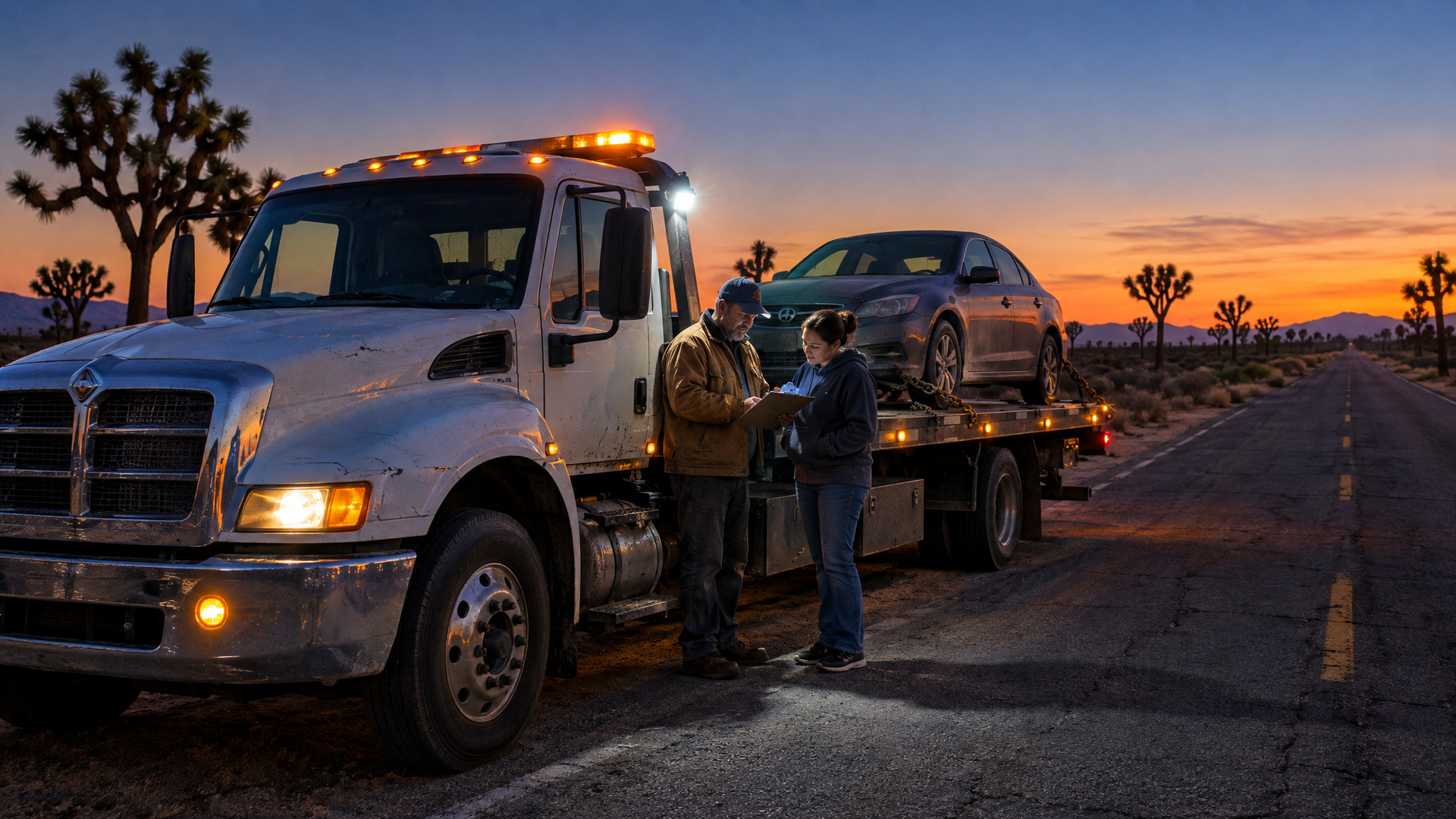
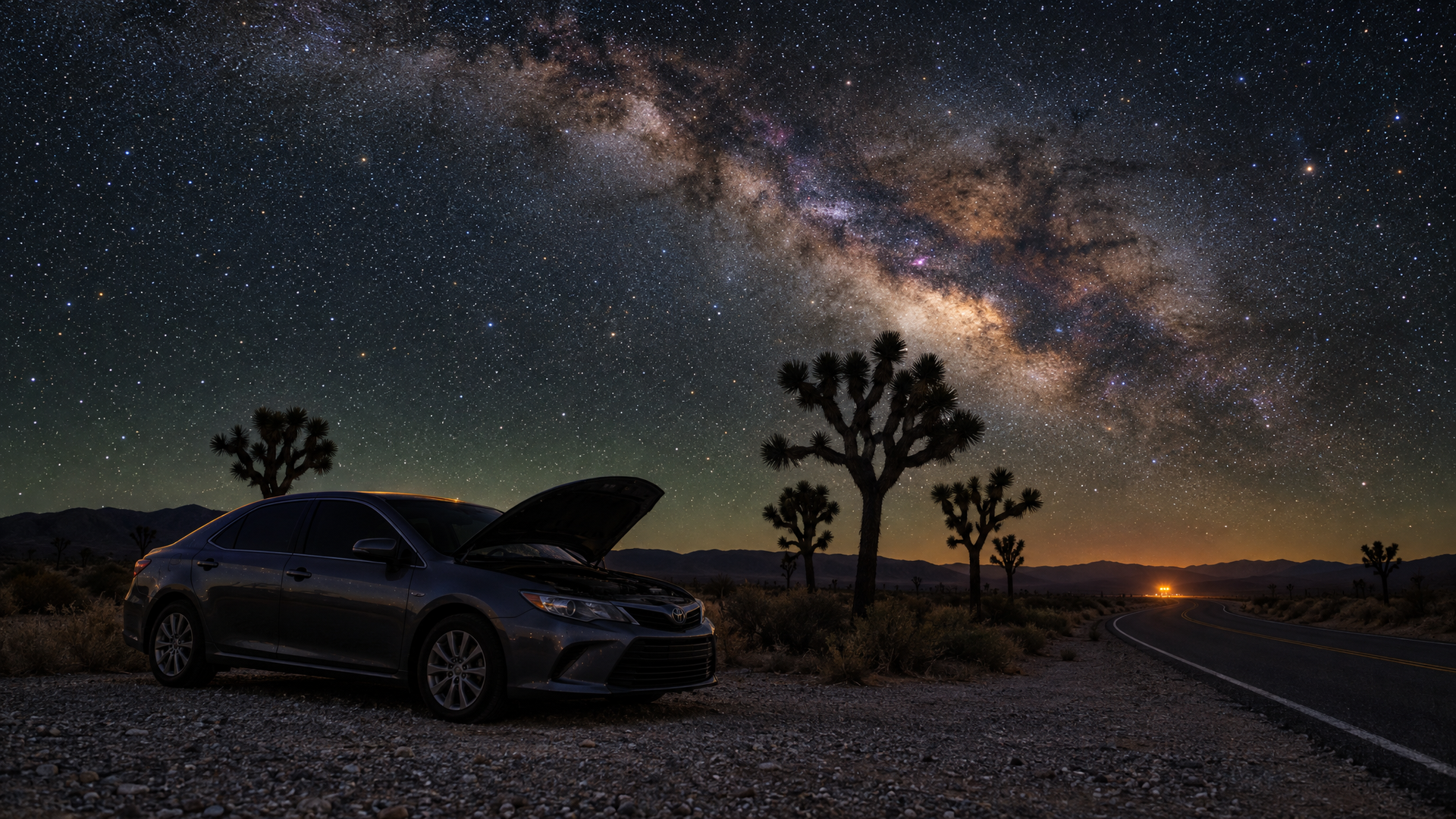
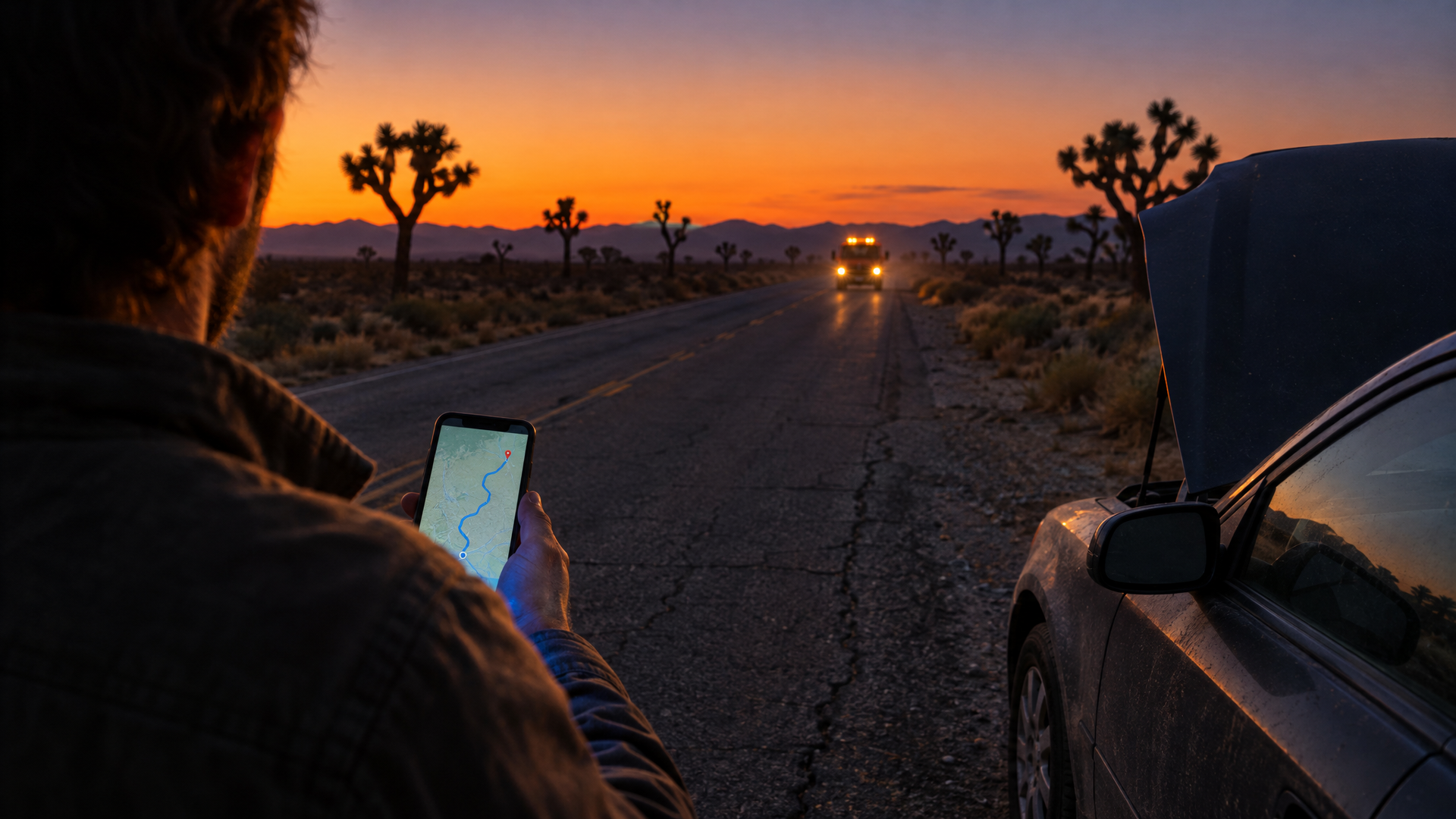
It's after dark on Twentynine Palms Highway, a few miles east of town. The car has died, a dispatcher quotes you a number over the phone, and an hour later a truck pulls up. You'll be paying a bill within the next hour or two, and most people have no idea what that bill is required to show.
California does spell it out. The rules are in Vehicle Code §22651.07, and they matter more than usual out here, where a tow can mean a long haul from a trailhead, a dirt road, or a stretch of SR-62 with no cell signal and no neighbors.
There isn't one price cap, and that surprises people
You'll find sites quoting a single statewide maximum for a tow. The statute's own consumer notice doesn't set one. It describes three kinds of tows and treats each differently:
- Public tows, where law enforcement requests the tow. Rates generally come from an agreement between the agency and the towing company.
- Private property tows, like a lot or an apartment complex. These can't exceed the approved rates of the law enforcement agency with jurisdiction, or the company's approved CHP rate.
- Owner's request tows, which is what a roadside breakdown usually is. Rates are generally set by mutual agreement between you and the towing company, though they can also be dictated by agreements between your motor club and its service provider.
For a desert breakdown, that last category means the price is something you can and should settle before the truck rolls.
What a tow invoice has to show
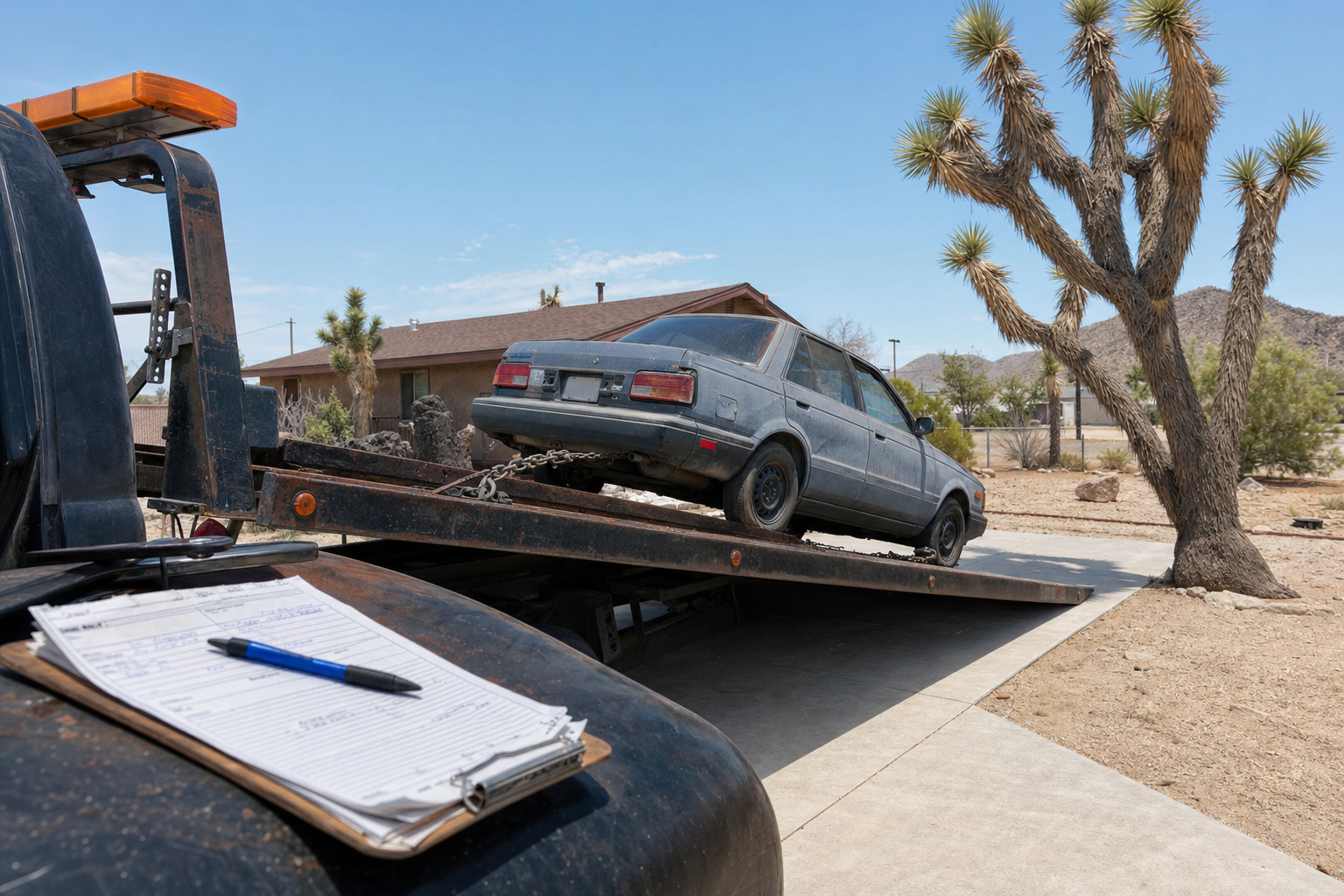
Before you pay for any towing, recovery, or storage, the facility must give you an itemized invoice of actual charges. The statute defines what counts, and the list is long. In plain language, it includes:
- Who is charging: the company's name, address, phone number, and carrier identification number.
- Your information, if it can be found, plus a description of the vehicle (year, make, model, odometer reading, plate or VIN).
- When and where: the date service started and the vehicle's location, either an address or the nearest intersecting roadways.
- The clock: dispatch time, the time the truck arrived, and the time service was completed.
- Extra time: a clear, itemized explanation of any additional services that pushed the total past one hour.
- The rate: the hourly or per-item rate used to calculate fees, with those fees as separate line items.
- Storage and gate fees, if they apply, as separate line items, with the daily rate and number of days for storage.
- How it was towed, meaning the method.
- Who ordered the tow, if it wasn't you.
- Any additional services or fees, explained clearly.
Any document that "substantially complies" counts, but the idea is that you can read the bill and see how the total was built.
Your rights before you pay
At the facility where your vehicle is stored, the statute gives you the right to:
- Get your personal property at no charge during normal business hours, which the statute defines as Monday through Friday, 8 a.m. to 5 p.m., except state holidays.
- Retrieve your vehicle during the first 72 hours of storage without paying a lien fee. That's about the lien fee, not storage, so storage can still be charged.
- Inspect the vehicle without paying a fee, and have your insurer inspect it at no charge during business hours (the facility can limit that to 45-minute blocks).
- Request a copy of the Towing and Storage Fees and Access Notice, which the facility must post and offer, and which must appear on the invoice as a boxed note.
- Pay by cash, an insurer's check, or a valid bank credit card.
If repairs are involved, you also have the right to choose the repair shop, and no repairs can be made without your written authorization. The tow authorization and the repair authorization must be on separate forms.
If the invoice doesn't comply
Anyone who violates the section is civilly liable to the vehicle's owner, or the owner's insurer, for up to two times the amount charged, capped at $500 per vehicle. The statute also says any person, not just the owner, may report a suspected violation. The consumer notice says disputes generally go to small claims court. This is general information, not legal advice, and a lawyer can tell you how it applies to your situation.
What this means for a desert tow
- Note your location carefully. The invoice has to record where your vehicle was, by address or nearest intersecting roadways. On a dirt road or an unmarked stretch of highway, note the closest cross street or mile marker and take a timestamped photo. That makes the record clear later.
- Mileage and time add up fast. Out here, a long run to a shop or yard is common, so ask how the distance will be billed.
- After-hours charges are a separate line. A gate fee must be listed on its own, with the date and time the vehicle was released after normal business hours.
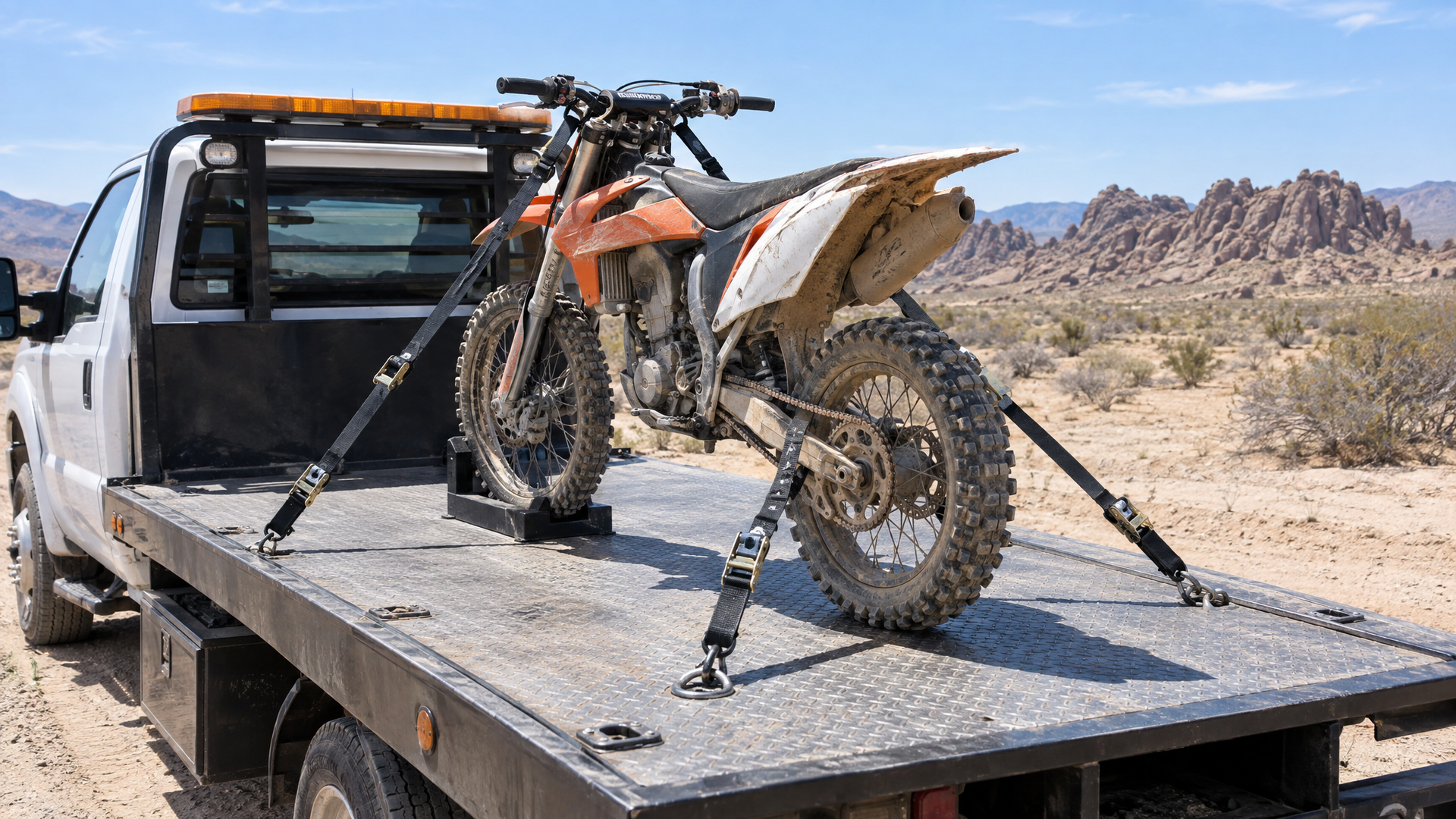
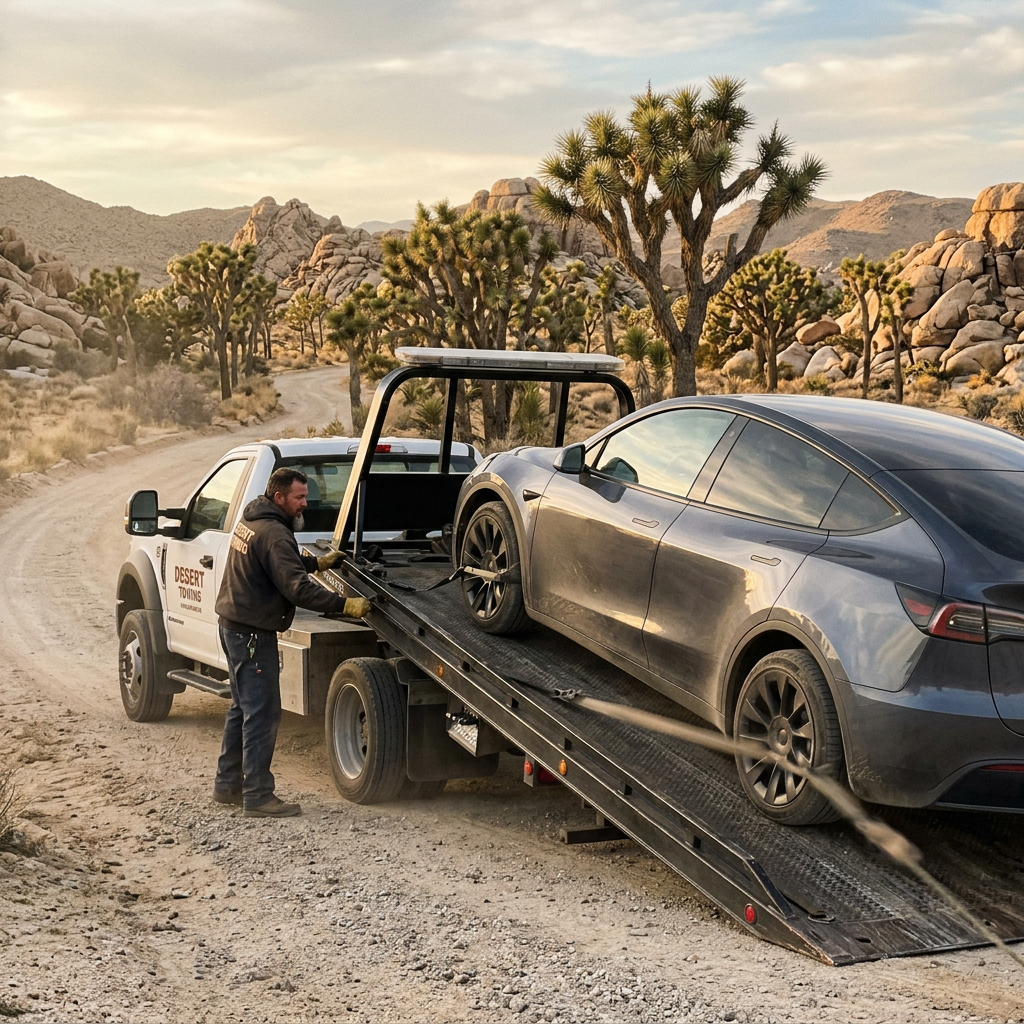
- Know the method. The invoice has to say how the vehicle was towed, which matters for all-wheel-drive vehicles, EVs, and motorcycles. We cover that in our guides to October breakdowns near Joshua Tree and motorcycle and dirt bike towing.
What to ask on the phone before you say yes
- What's the rate, and how is it calculated: hourly, per mile, a flat fee, or a minimum?
- How will the vehicle be towed, flatbed or wheel-lift?
- What's the estimated arrival time?
- How can I pay?
- If the vehicle goes to a yard, what are the hours, and can I get my belongings?
Questions about tow invoices
Can a tow yard keep my belongings until I pay?
No. The statute says you can receive your personal property at no charge during normal business hours, even before paying towing and storage fees.
Does the 72-hour rule mean storage is free for the first three days?
Not exactly. It means you can retrieve your vehicle in the first 72 hours of storage without paying a lien fee. Storage charges can still apply, and they must be itemized.
What's the maximum a tow company can charge in California?
There's no single statewide cap in the statute. Public tows follow law enforcement agreements, private property tows can't exceed approved rates, and owner's request tows are set by agreement.
Stranded near Twentynine Palms, Joshua Tree, or anywhere on Highway 62?
Call (442) 205-6198 and ask for the rate and what's included before you decide.
You deserve to know the number before the truck arrives.