Joshua Tree Stargazing Car Trouble: What to Do If Your Car Won't Start After Dark
Joshua Tree Stargazing Car Trouble: What to Do If Your Car Won't Start After Dark
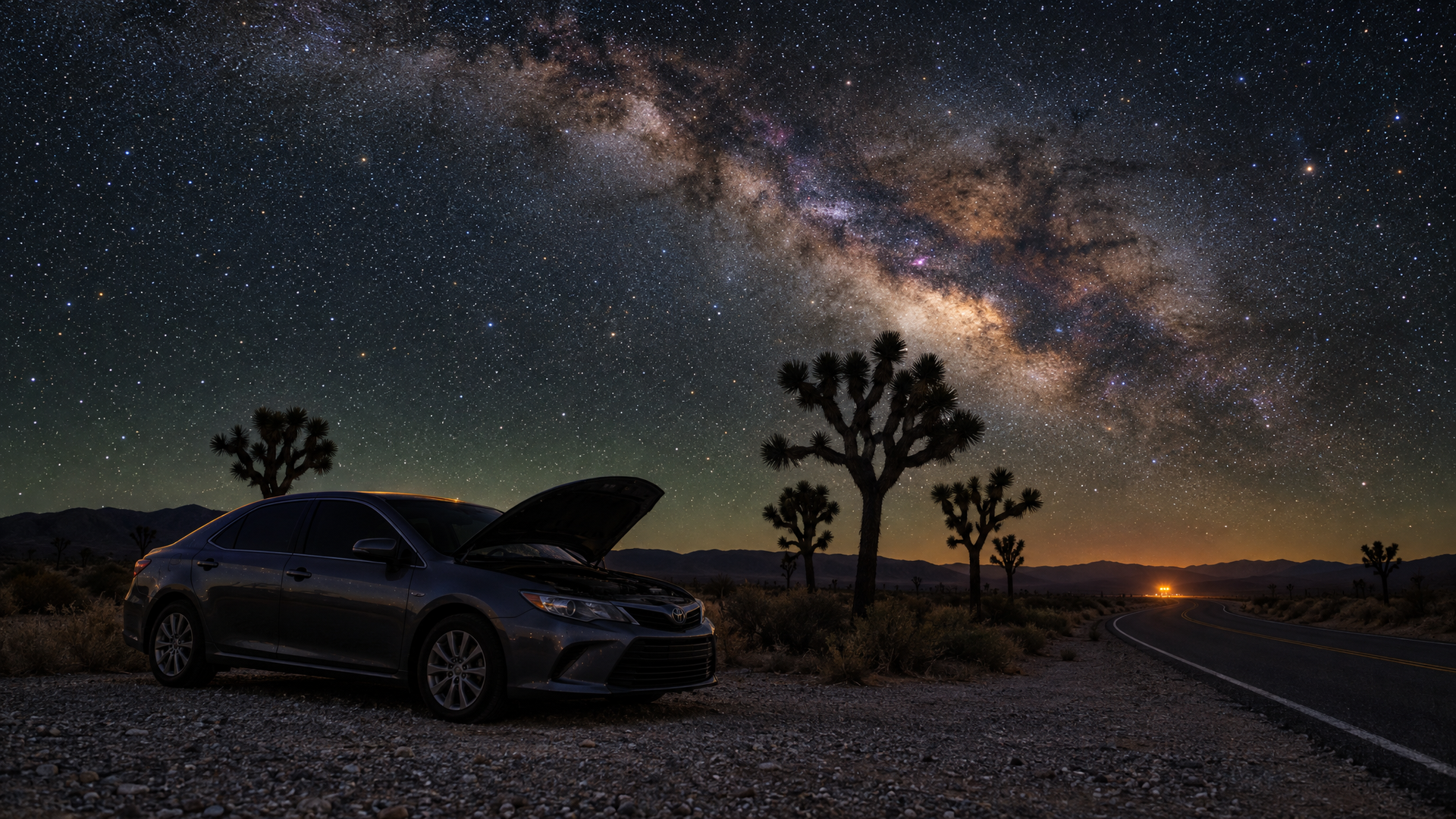
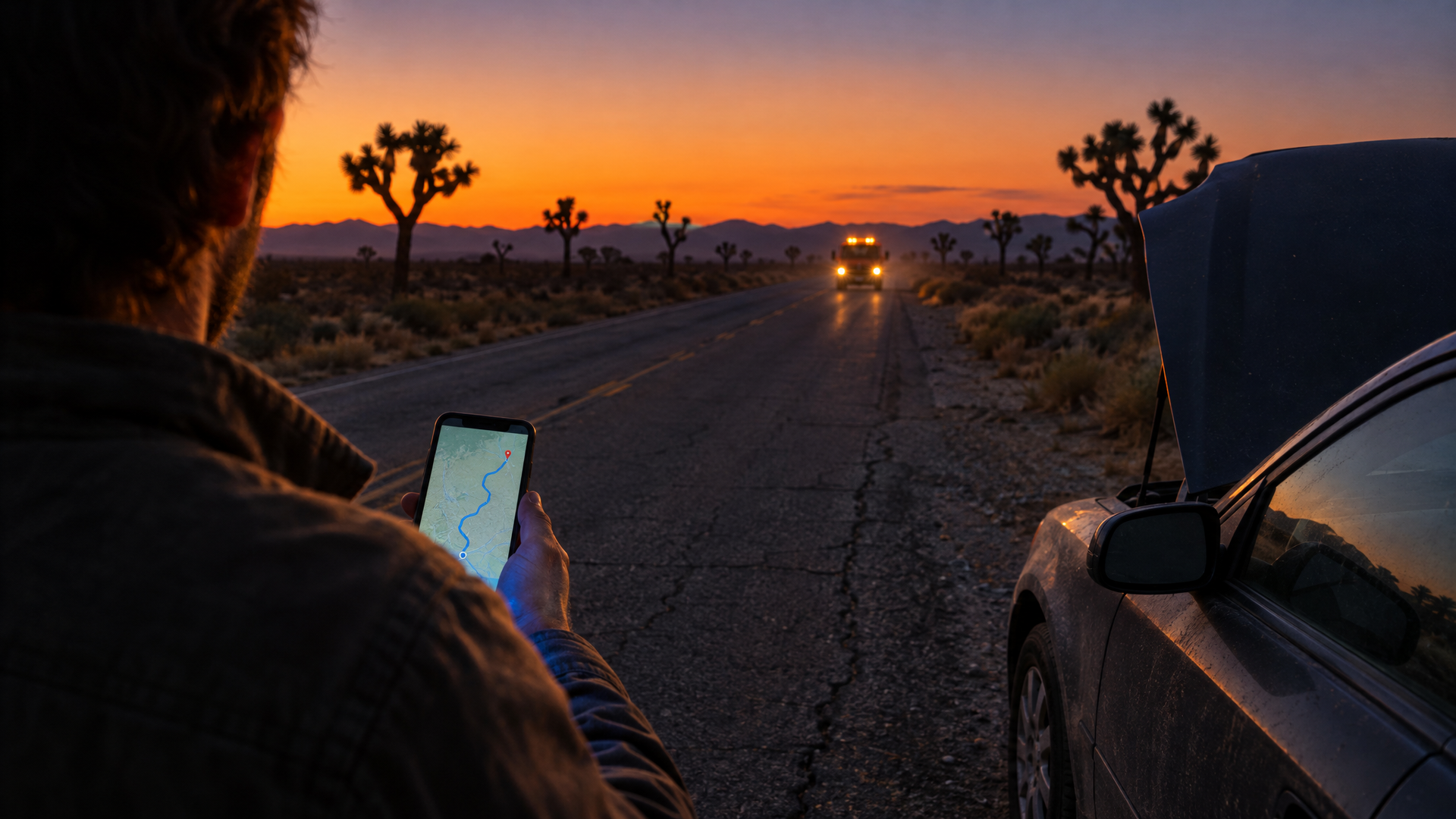
It's 11 p.m. The Milky Way has been overhead for two hours, your phone is at 12%, and the car you parked in a gravel pullout doesn't want to start. There's no city glow to walk toward, because the whole point of this place is that it's dark.
This is the weekend for it. The 11th annual Joshua Tree Night Sky Festival is listed by Visit 29 Palms for October 9 and 10, based at Sky's the Limit Observatory & Nature Center on Wellock Road in Twentynine Palms, and the Joshua Tree Music Festival's fall edition runs October 8 through 11. Add Joshua Tree's status as an International Dark Sky Park and October's comfortable weather, and a lot of people are out here after sunset who wouldn't be in July.
Why a breakdown after dark is different here
The National Park Service has been plain about what astronomy crowds mean for the area: traffic surges, delays of up to several hours getting into the park during big events, unreliable cell service, and no food or water for sale inside the park. After dark, add a few more problems:
- You can't see the problem. A flat tire, a dead battery, and a stuck wheel all look the same in the dark.
- Help takes longer to find you. Dirt pullouts and unmarked roads look identical in a headlight beam.
- The temperature drops quickly, as we covered in our guide to October breakdowns near Joshua Tree.
Why stargazing kills batteries
The most common after-dark problem is simple: the engine is off and everything else is on. Interior lights, an open door, hazard lights, a phone charger, and the stereo all draw from a battery that isn't being recharged. A battery that spent the summer in desert heat is already weaker than it was, and a couple of hours of small drains can be enough to leave it unable to turn the engine over.
- Keep the doors fully closed so the dome light isn't on.
- Avoid running the stereo or accessories with the engine off.
- Save hazard lights for when you actually need them.
- Charge your phone before you go, or from a portable battery pack instead of the car.
Before you leave cell service
- Save our number now: (442) 205-6198. You won't want to be searching for a tow company with one bar.
- Download the National Park Service app for offline use before you enter, as the park itself recommends.
- Share your location with someone before you lose signal, and tell them where you're headed and when you expect to be back.
- Note your pullout. A road name, the nearest cross street, or a landmark will matter if you need to explain where you are.
If your car won't start
- Don't keep cranking. Repeated attempts on a weak battery can drain whatever's left.
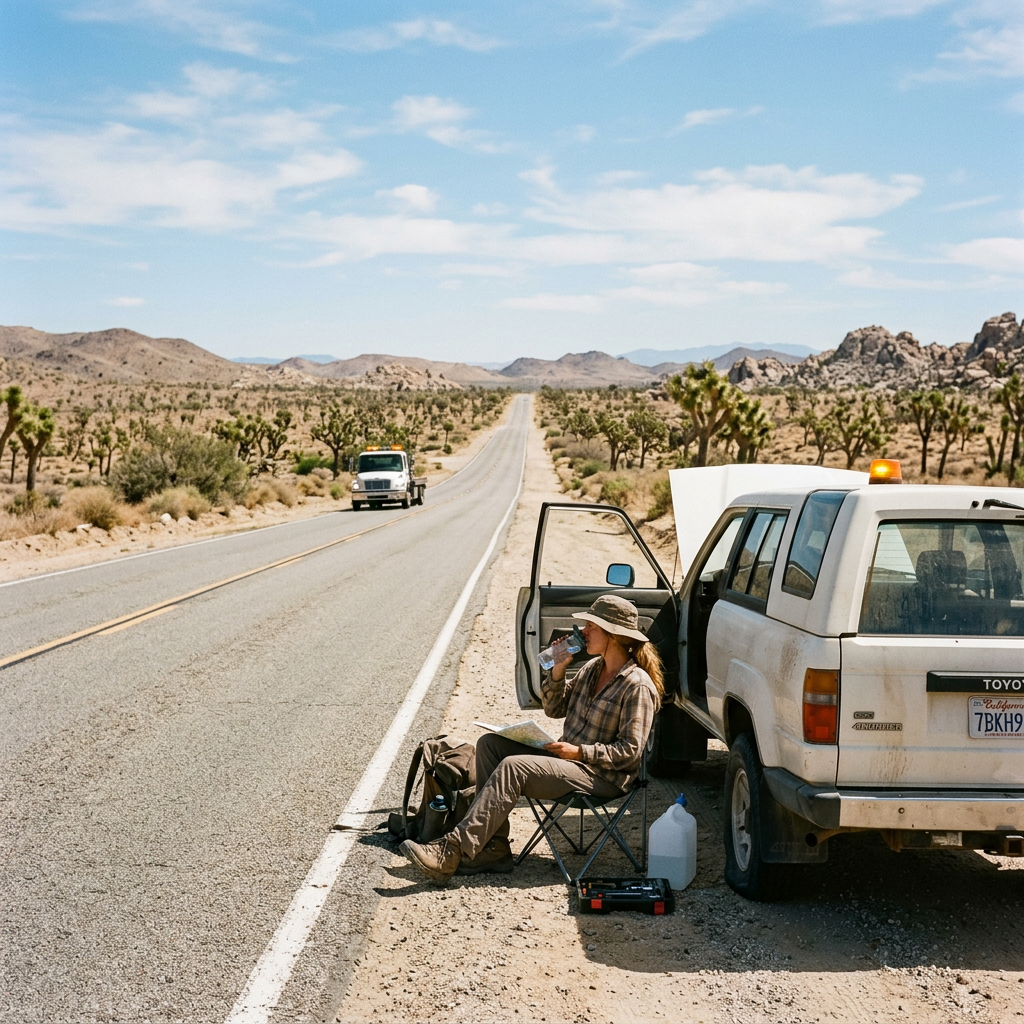
- Stay with the vehicle unless you're sure about exactly where you are and where help is. A parked car is easier to find than a person on foot at night.
- Turn on hazards sparingly, and only if you're near a road where someone could come upon you.
- Call as soon as you have signal, and give the dispatcher your location in the clearest terms you can.
What to tell the dispatcher
Out here, the location is the whole call. Give us:
- The road name and which direction you were traveling.
- The nearest cross street, mile marker, or landmark.
- What happened: won't start, flat tire, stuck in sand, or something else.
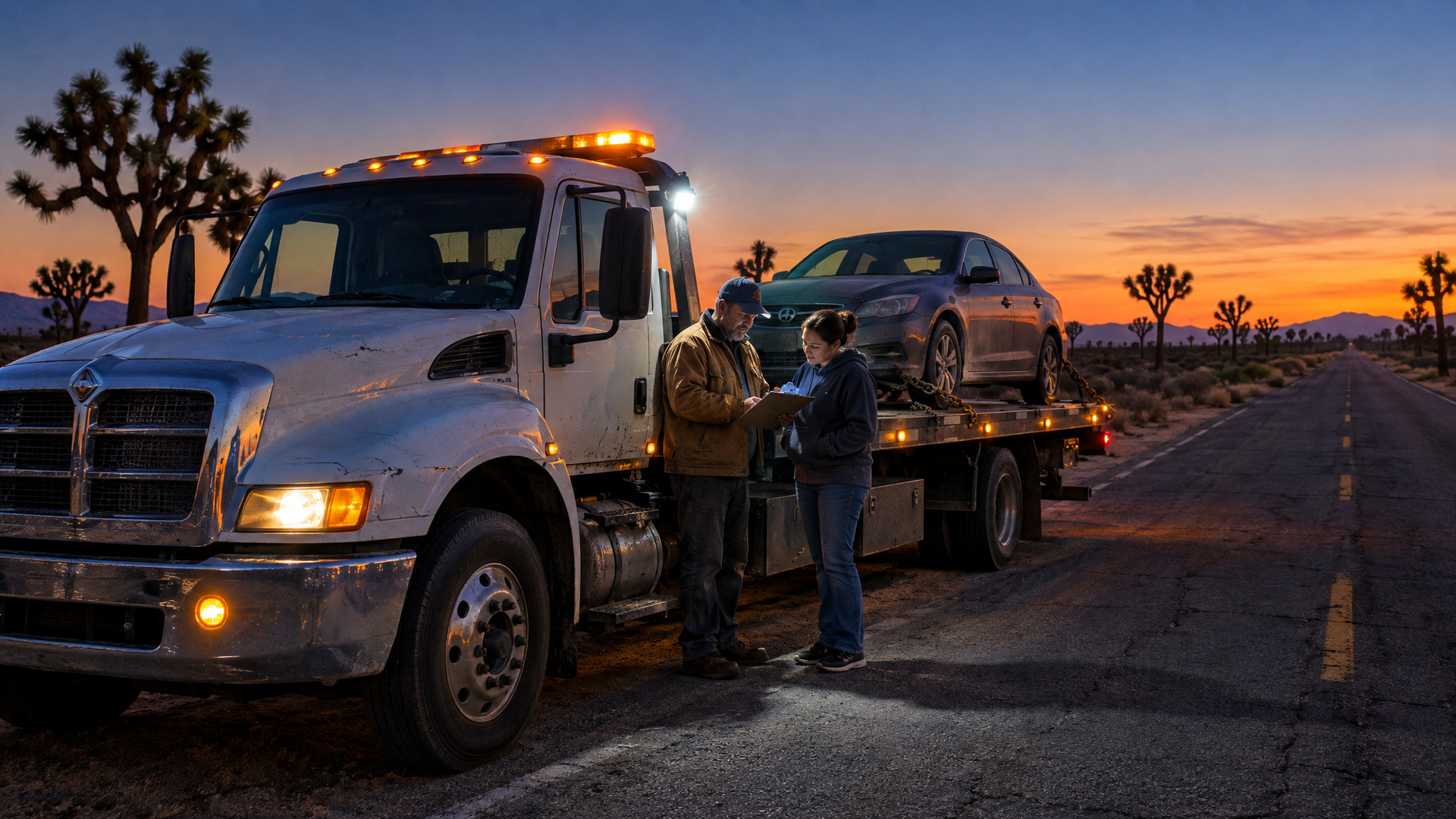
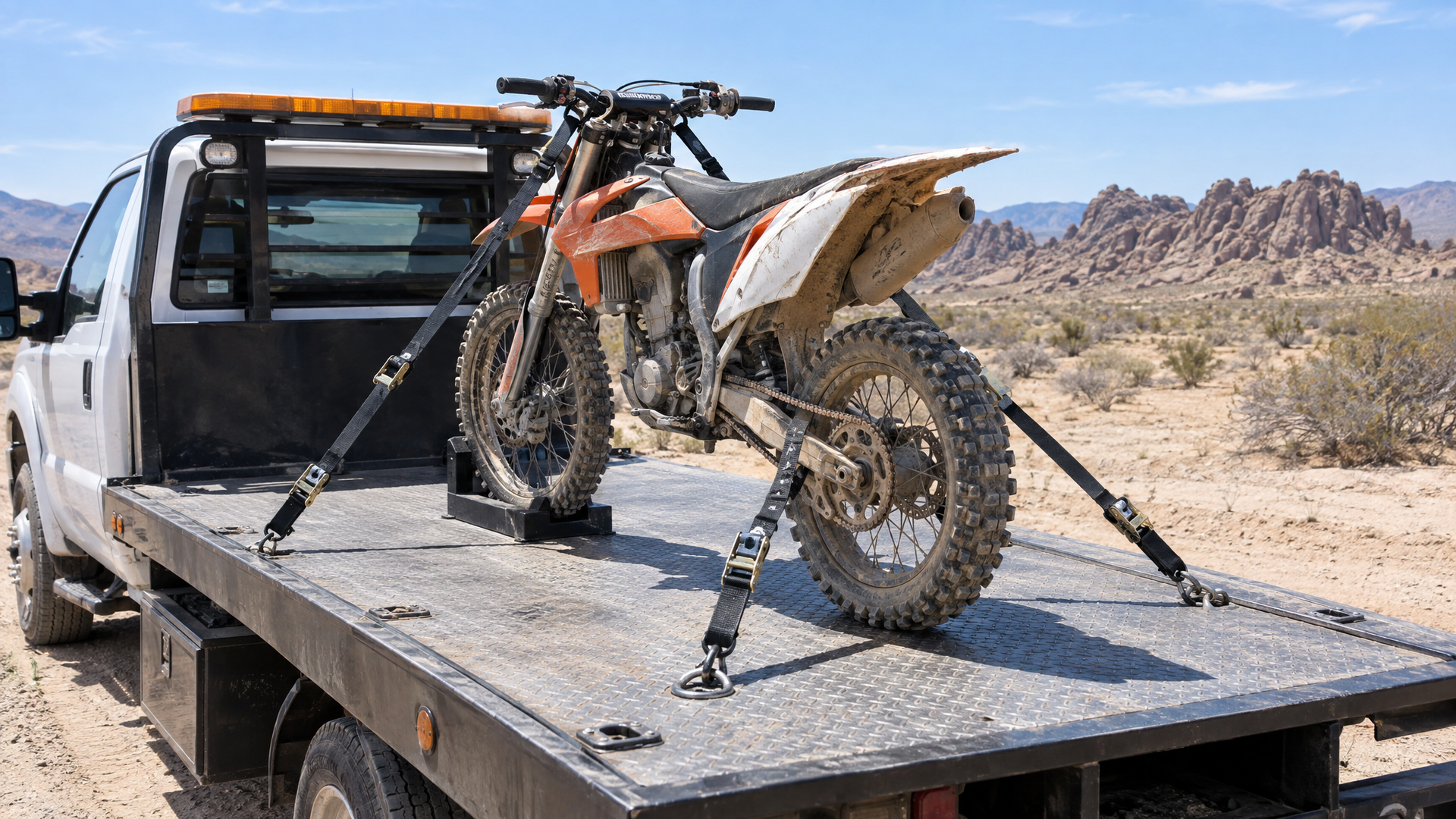
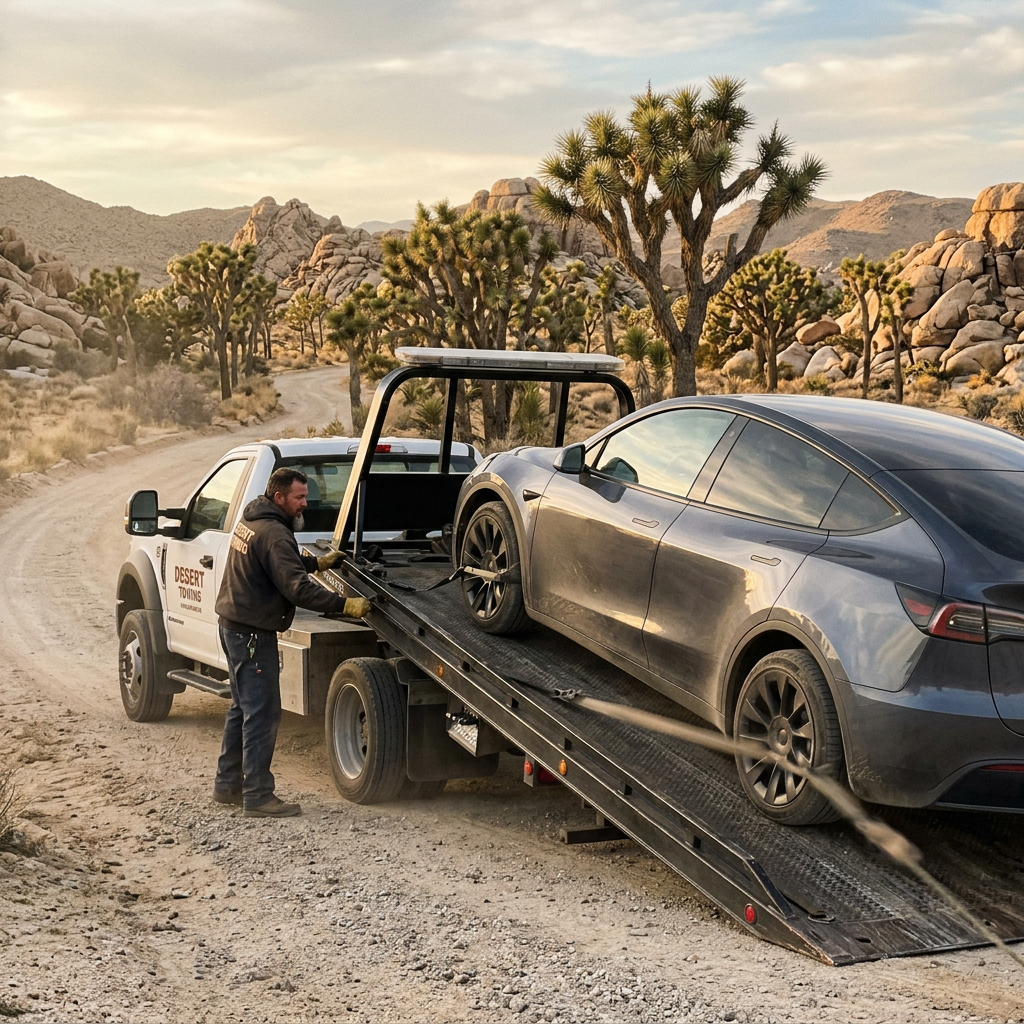
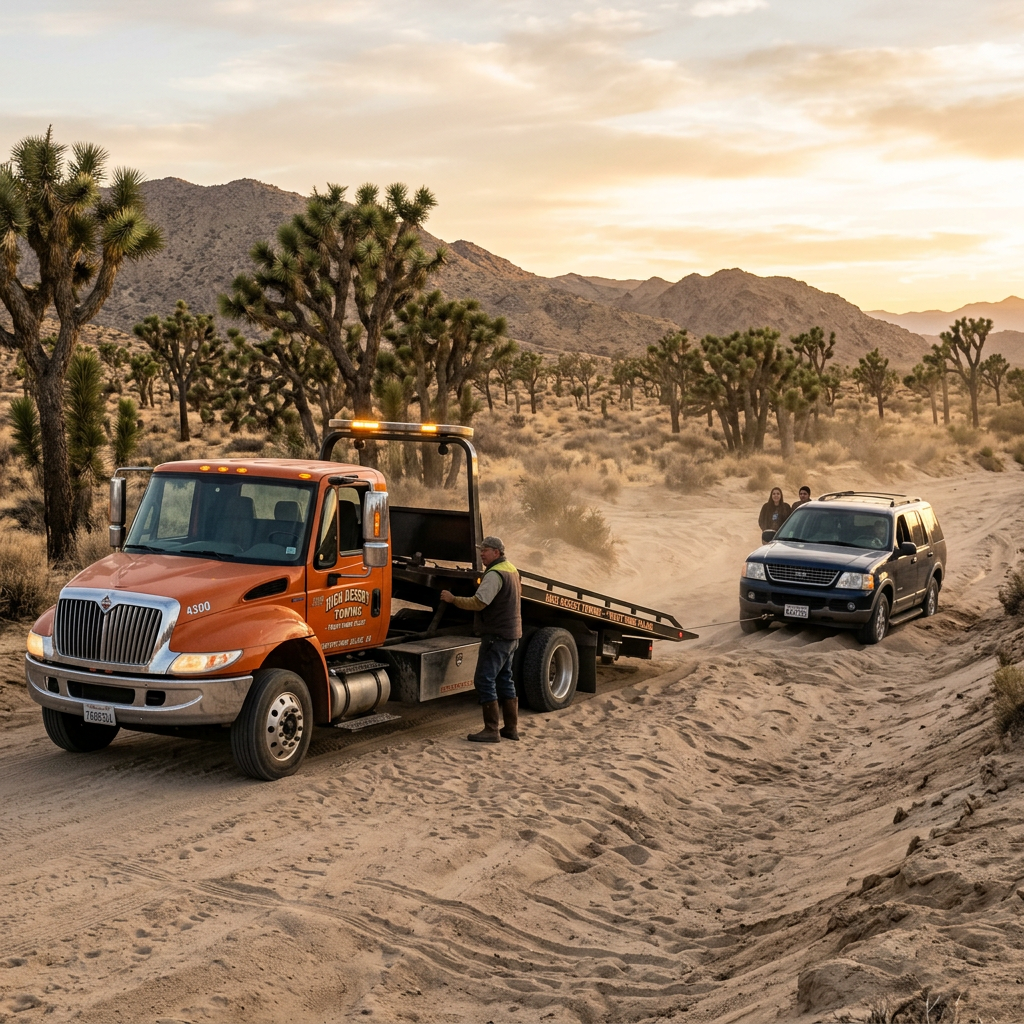
- The vehicle type: all-wheel drive, EV, or motorcycle, since that affects how we tow it. See our guides to EV towing and off-road recovery.
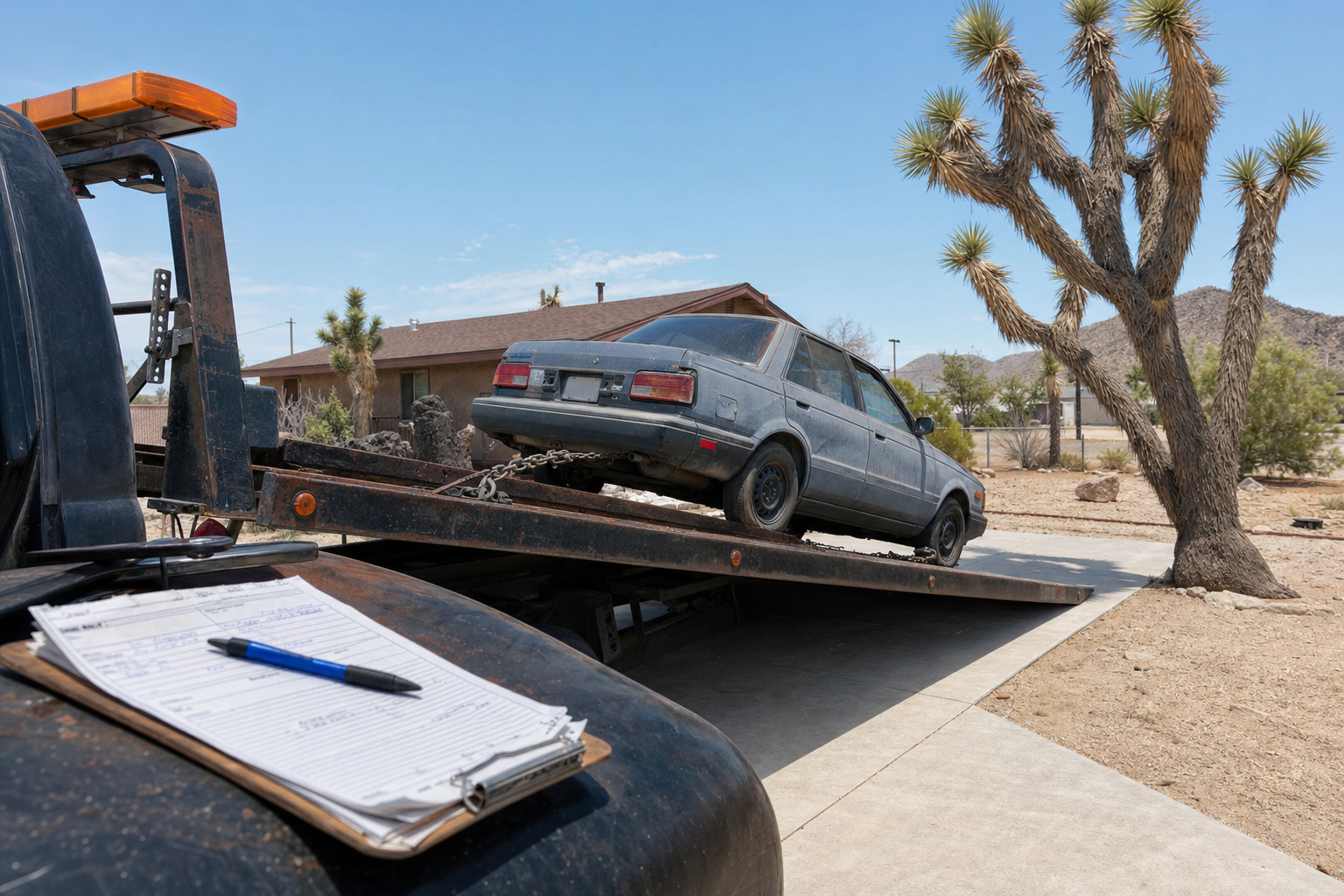
California law requires a tow invoice to record where your vehicle was, by address or nearest intersecting roadways, so a clear description helps both of us. Our guide to the required contents of a California tow invoice explains the rest, and our guide on calling your motor club or a local company covers who to call first.
Smarter parking for a dark night
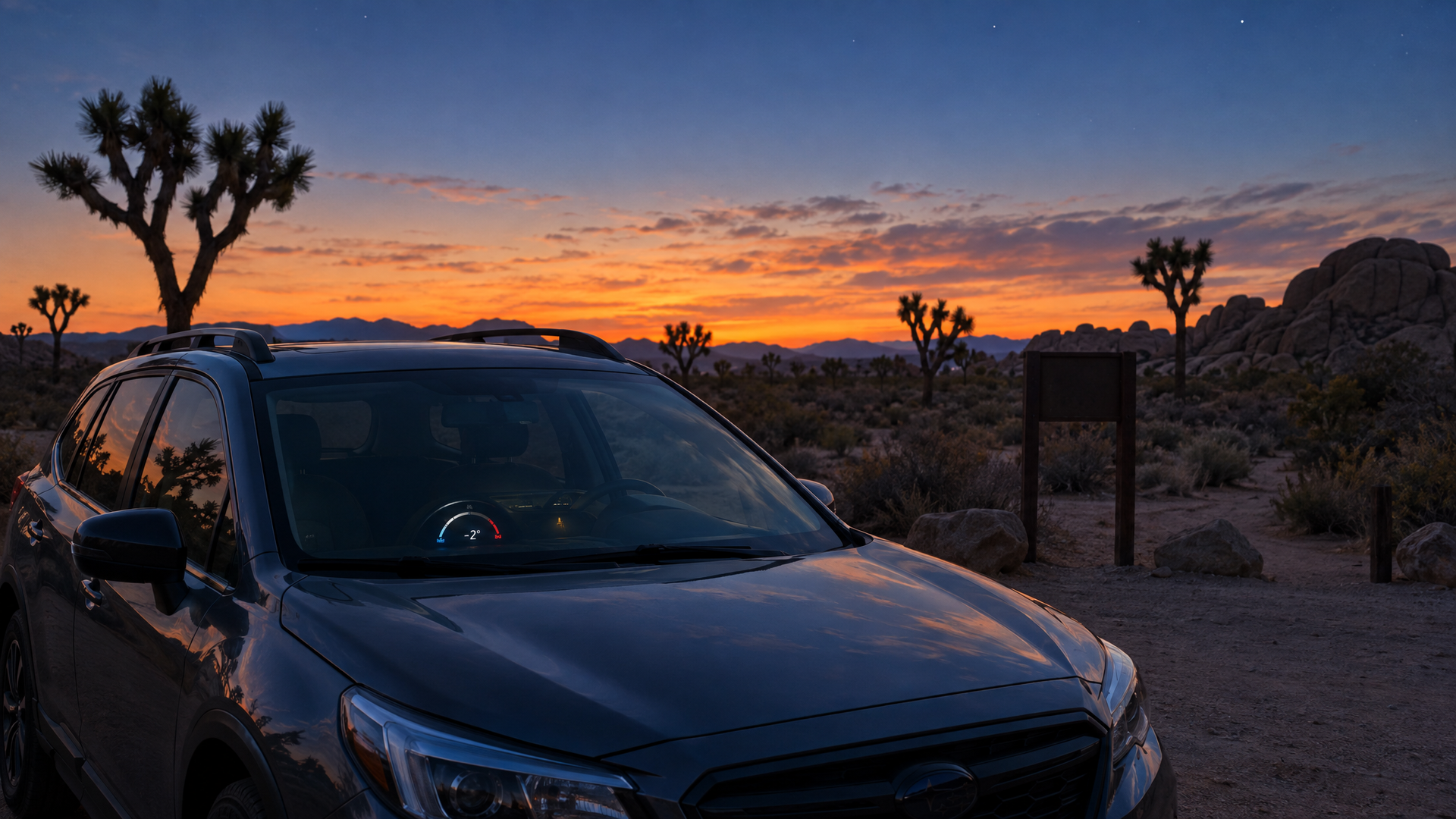
- Park facing the way out, so you don't have to maneuver in the dark.
- Choose a firm, flat pullout over soft sand or loose gravel.
- Avoid parking over dry brush. A hot exhaust over dry vegetation is a fire risk in a desert.
- Leave early if the crowd is large. After a big event, everyone leaves at once.
Questions about night breakdowns near Twentynine Palms
Will my phone work in the park?
Often not. The NPS warns that cell service is unreliable inside the park, so set up your plan before you lose signal.
Should I walk for help if I don't have signal?
Generally not, unless you know exactly where help is. A stopped vehicle is much easier for a tow truck or ranger to find than a person walking in the dark.
Does it matter what kind of vehicle I drive?
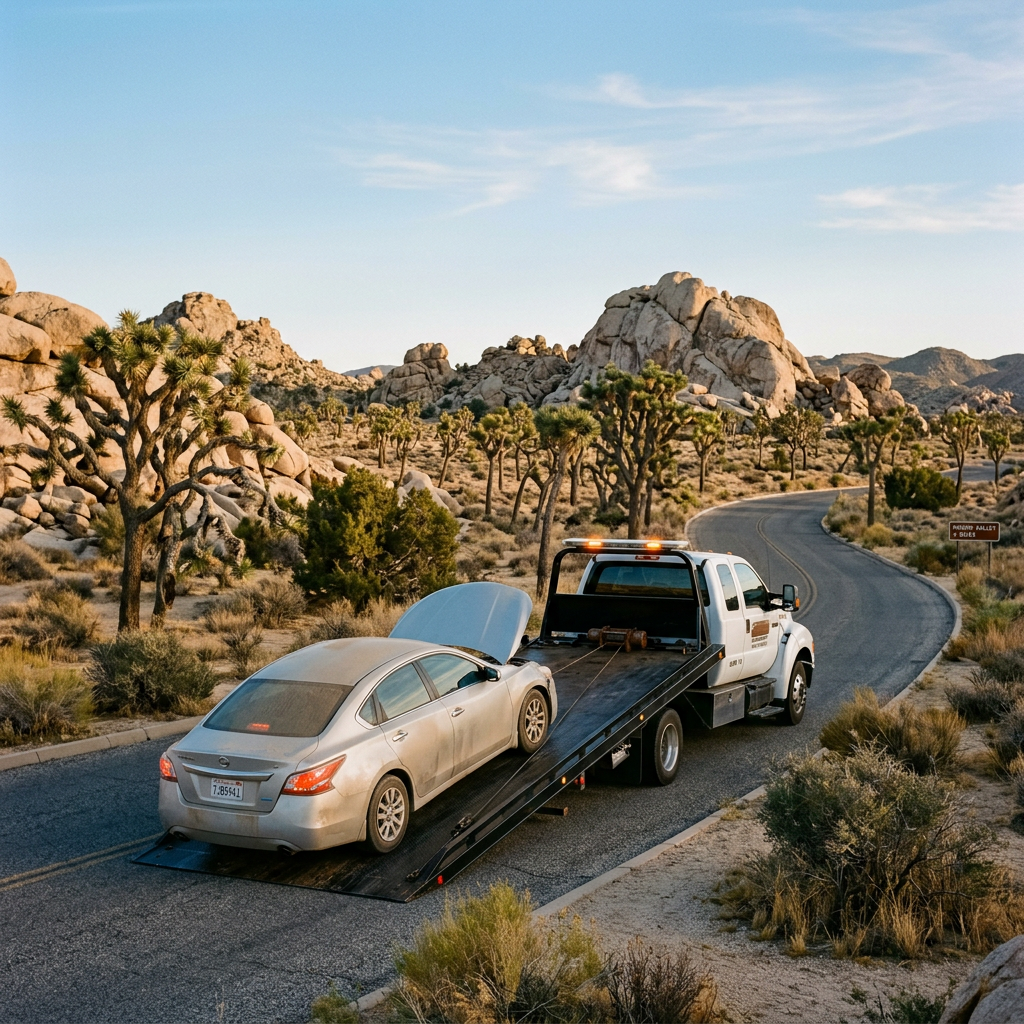
Yes. An EV, an all-wheel-drive car, or a motorcycle may need a flatbed, so tell the dispatcher what you have.
Out stargazing near Twentynine Palms or Joshua Tree?
Save (442) 205-6198 before you lose signal.
You'll reach a local dispatcher, not a national call center, and our licensed, insured drivers cover the Morongo Basin 24/7.
Call for a free quote, day or night.