Why October Is Joshua Tree's Busiest Month for Breakdowns, Not Just Visitors
Why October Is Joshua Tree's Busiest Month for Breakdowns, Not Just Visitors
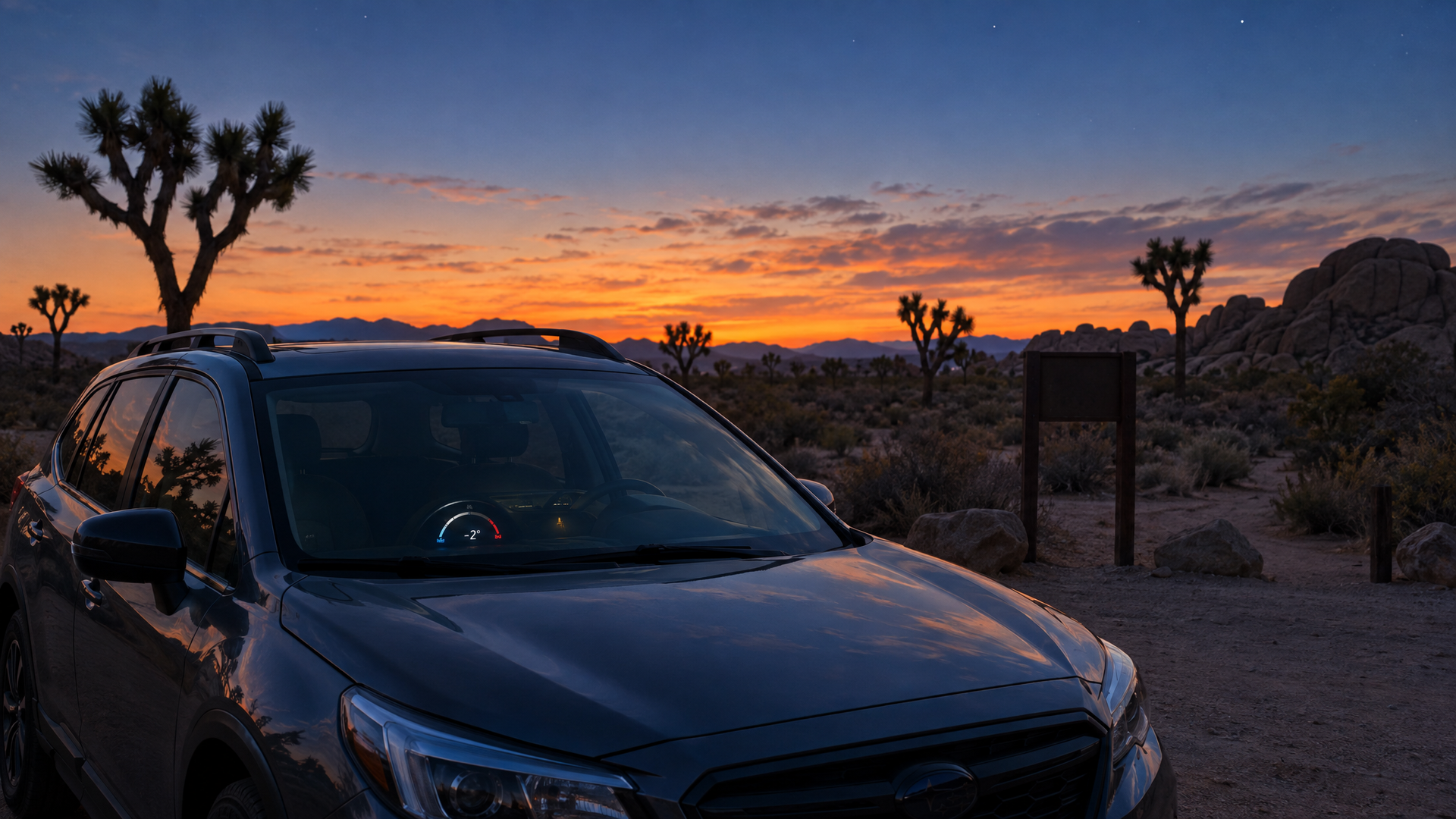
October is the month everyone tells you to visit Joshua Tree. The brutal summer heat finally breaks, daytime highs settle into the comfortable 70s and 80s, and weekend crowds start building back up after a quiet summer — the park's busy season essentially runs from here through May. It's also, for a less obvious reason, one of the months we see a real uptick in roadside calls.
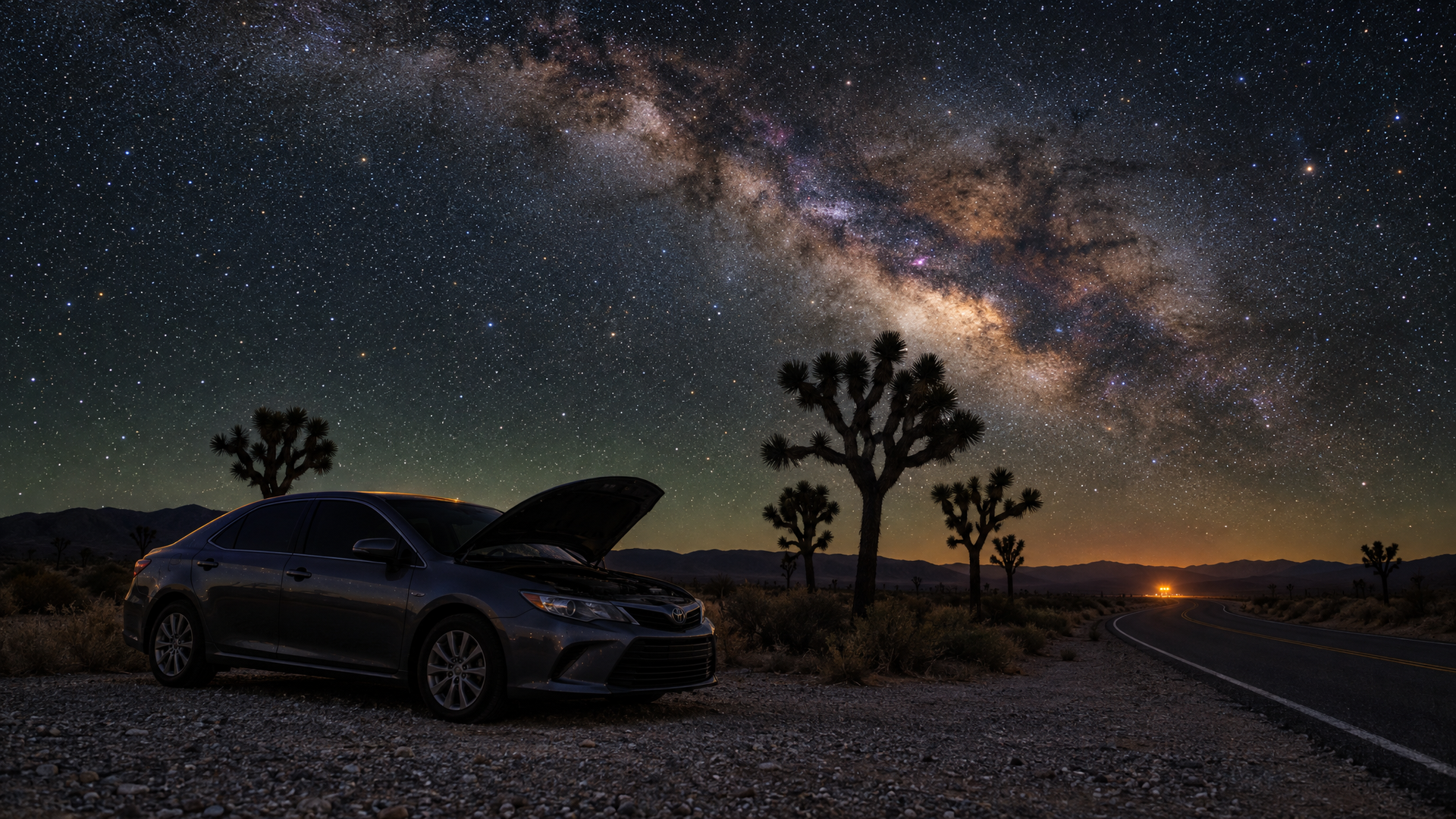
The issue isn't the daytime weather. It's the gap between daytime and nighttime temperatures, which widens significantly once fall sets in. A pleasant 80-degree afternoon can drop to the 40s or even lower once the sun goes down — a swing that barely registered during a summer where it stayed hot around the clock, but becomes a real factor once the nights start actually getting cold.
Why the Day-to-Night Swing Matters More Than the Daytime High
A lot of visitors check the daytime forecast, see a comfortable number, and assume the day is going to be easy on both themselves and their vehicle. That's only half the picture. Joshua Tree sits at an elevation and in a climate where desert air holds very little heat after sunset, which is exactly why the same clear skies that make for gorgeous daytime photos also mean the ground and the air around it lose heat fast once the sun goes down. A 40-degree swing between a 2pm high and a 2am low is completely normal out here in October, and that's a bigger daily range than most visitors experience anywhere else they drive.
Why Tire Pressure Drops Right When You're Furthest From Help
Tire pressure drops as temperatures fall, following basic physics — air contracts as it cools, and a tire loses roughly 1 PSI for every 10-degree drop in temperature. A tire set to the correct pressure during a warm afternoon fill-up can be noticeably underinflated by the next cold morning, and an underinflated tire runs hotter, wears unevenly, and is measurably more prone to a sidewall failure on rough, rocky desert roads — exactly the terrain surrounding most of Joshua Tree's trailheads and backcountry access points. This is the kind of slow, invisible problem that doesn't show up as a warning light. It shows up as a flat, usually miles from the nearest paved road.
Why Batteries That Survived August Sometimes Don't Survive October
Car batteries take a real beating from a full desert summer. Sustained extreme heat accelerates internal chemical degradation and shortens a battery's effective lifespan, which means a lot of batteries heading into fall are already weaker than they were back in June, even if they've shown no outward symptoms. Cold starts ask more of a battery than warm ones do, and the first genuinely cold October night is often the moment a battery that was already quietly failing finally can't deliver enough current to turn the engine over. The timing is almost cruel: the battery spent all summer getting weaker from heat, and the first real test of that weakness comes from cold, not heat.
Why October Visitors Are Often the Least Prepared for a Breakdown
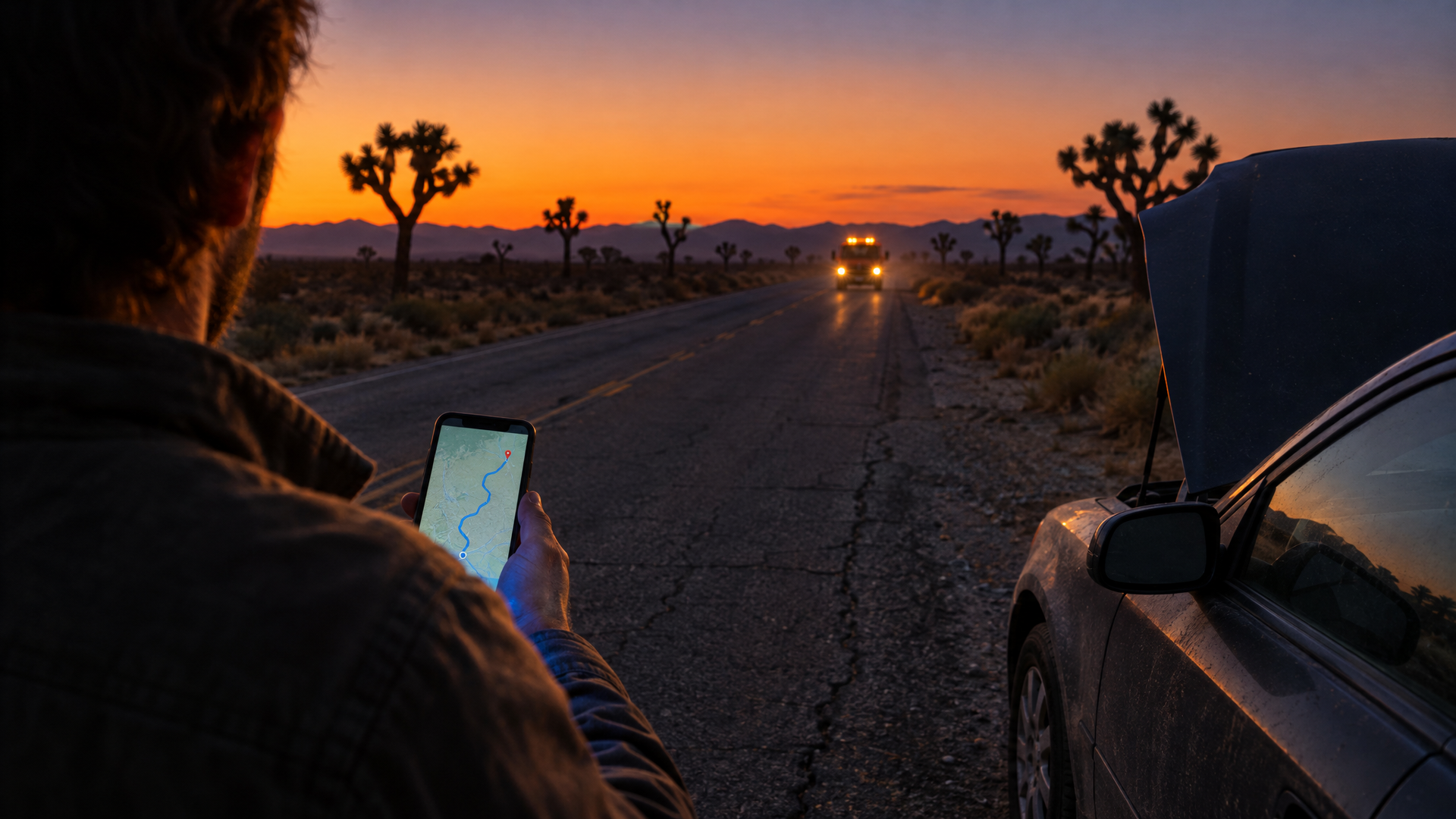
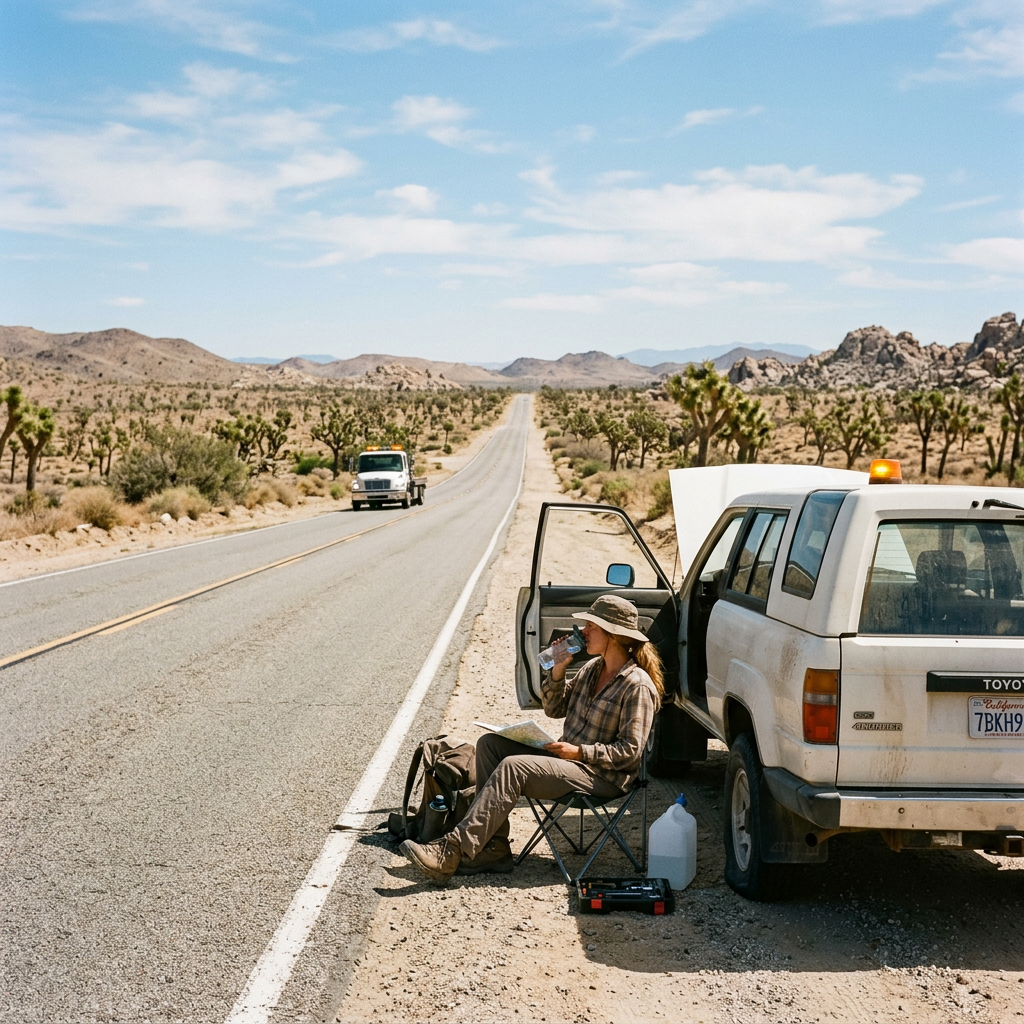
There's a visitor-behavior factor layered on top of the vehicle one. October's comfortable daytime weather draws exactly the kind of casual, first-time-to-the-desert visitor who wouldn't have come in July's triple-digit heat — people less familiar with how fast desert conditions change, less likely to be carrying extra water or a real spare tire, and more likely to be surprised by how cold a clear desert night actually gets once they're set up camping miles from the nearest town. Peak season means more people on the roads overall, and a higher share of those people are visiting the desert for the first time, which is a combination that tends to produce more roadside calls, not fewer.
What's Actually Worth Checking Before You Head Out This Month
None of this means October is a bad time to be out here — it's genuinely one of the best months the park has, which is exactly why the roads and campgrounds fill back up. A few minutes of prep goes a long way: check tire pressure cold, before the day heats up, rather than relying on a reading taken hours earlier. If your battery is more than three or four years old, or if it struggled at all over the summer, this is a reasonable month to have it tested rather than wait to find out the hard way. Pack for the actual overnight low, not the daytime high, especially if you're camping rather than day-tripping.
The margin for a vehicle that's been running on fumes since August is thinner than it feels on a nice afternoon, and the visitors least prepared for a breakdown are often the ones most likely to have one.
Heading into Joshua Tree or anywhere around Twentynine Palms this month?
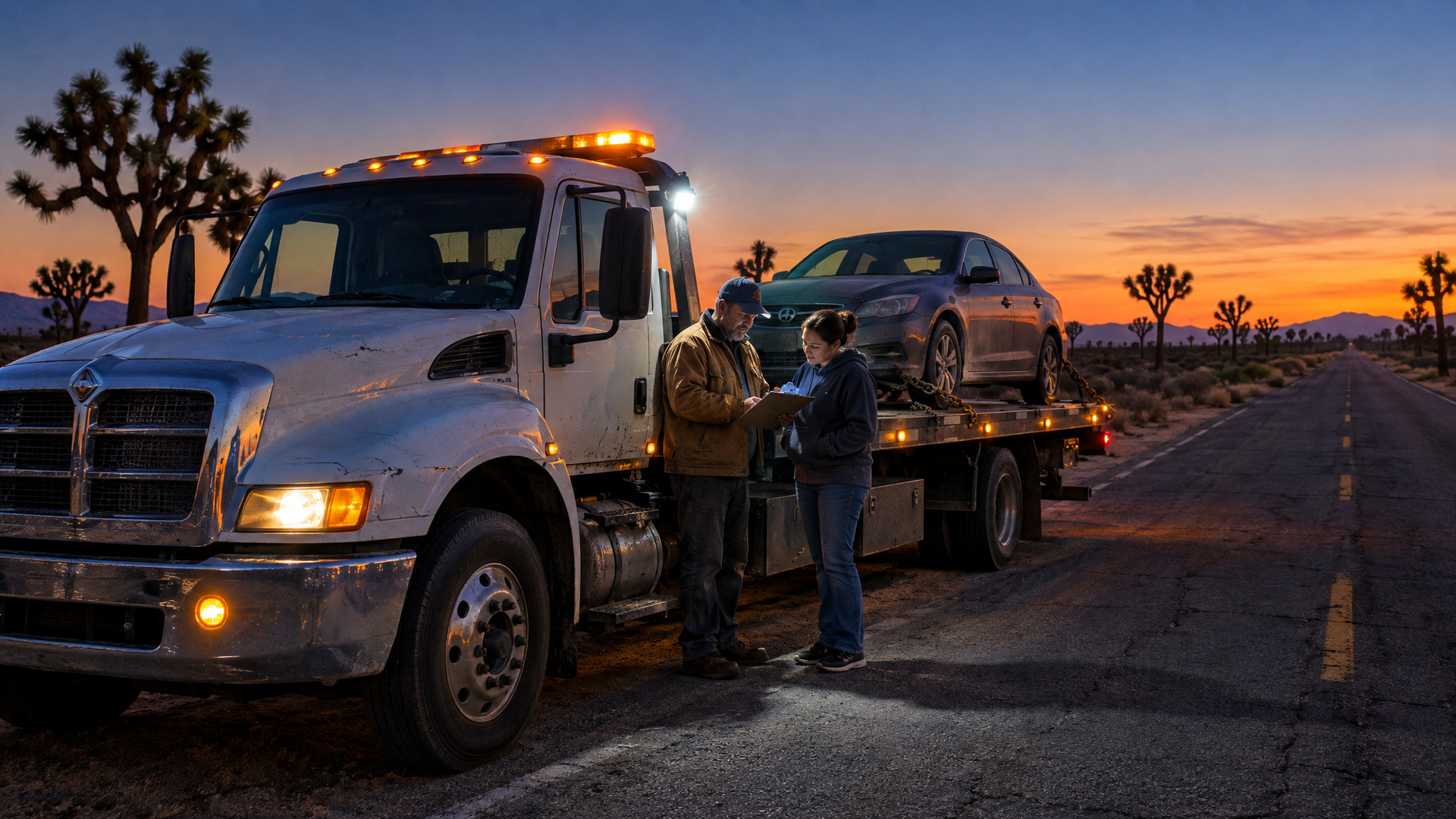
If something goes wrong, we're already out here. Call (442) 205-6198.