Flooded Roads Near Twentynine Palms: What to Know After a Desert Storm
Flooded Roads Near Twentynine Palms: What to Know After a Desert Storm
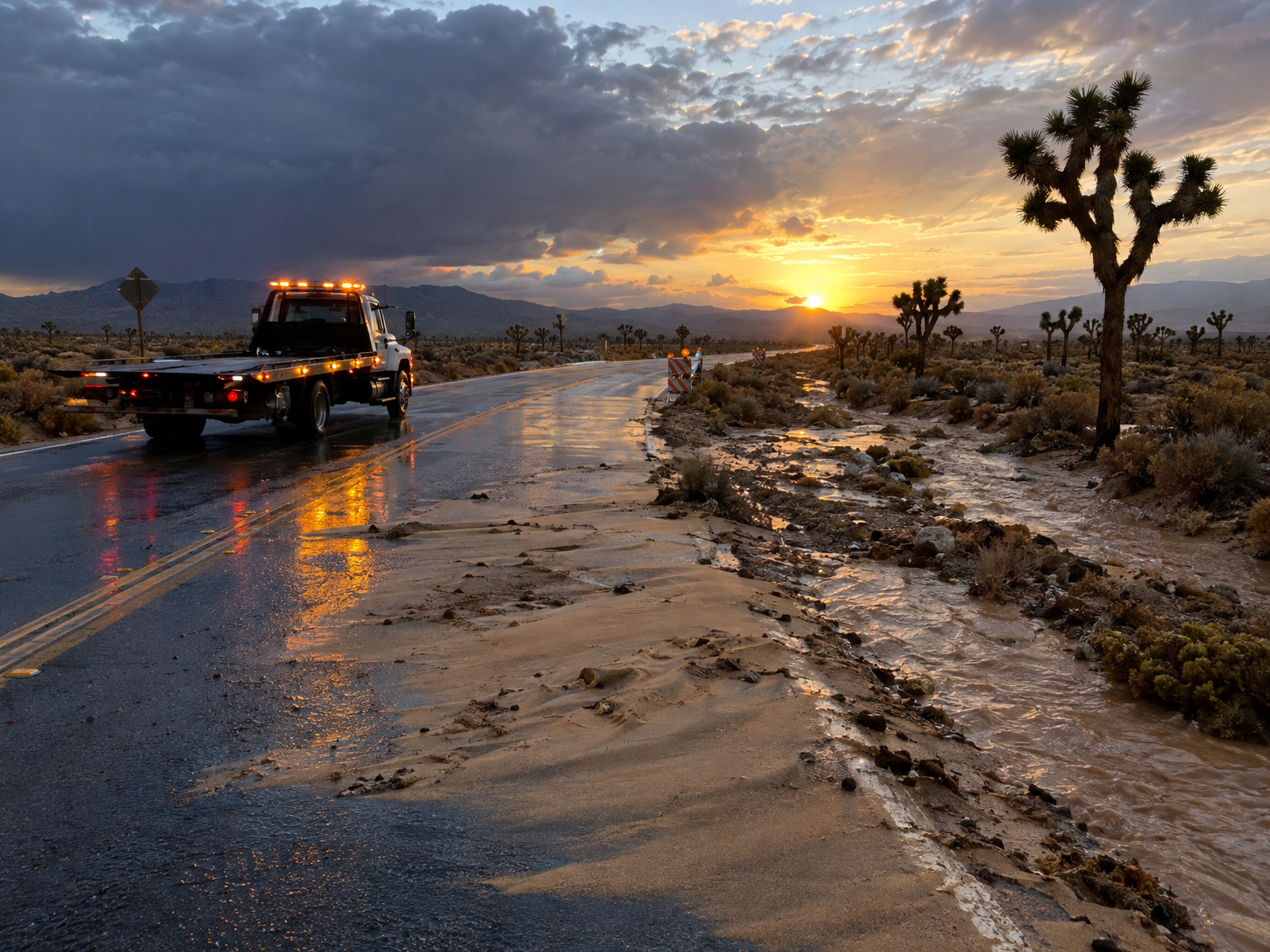
For most of last weekend, the Morongo Basin got what the desert doesn't usually get in October: a tropical storm. The National Weather Service had a Flood Watch and a Wind Advisory out for the area from October 10 to 12, with gusts forecast as high as 50 mph, and across the Coachella Valley, KESQ reported many roads flooded.
The rain has moved on and the forecast has been sunny, but the desert is still dealing with it. Some of the roads aren't open yet, and driving after a storm carries risks of its own.
What was closed, as of October 18
- State Route 62 east of Twentynine Palms. Caltrans data updated October 18 still showed SR 62 closed from 2.4 miles east of Twentynine Palms at Godwin Road to the SR 177 junction in Riverside County, due to flooding. On October 12, Patch also reported flooding closing SR 62 farther east, from the US 95 junction to the Arizona state line, and heavy traffic on Interstate 10 as a result.
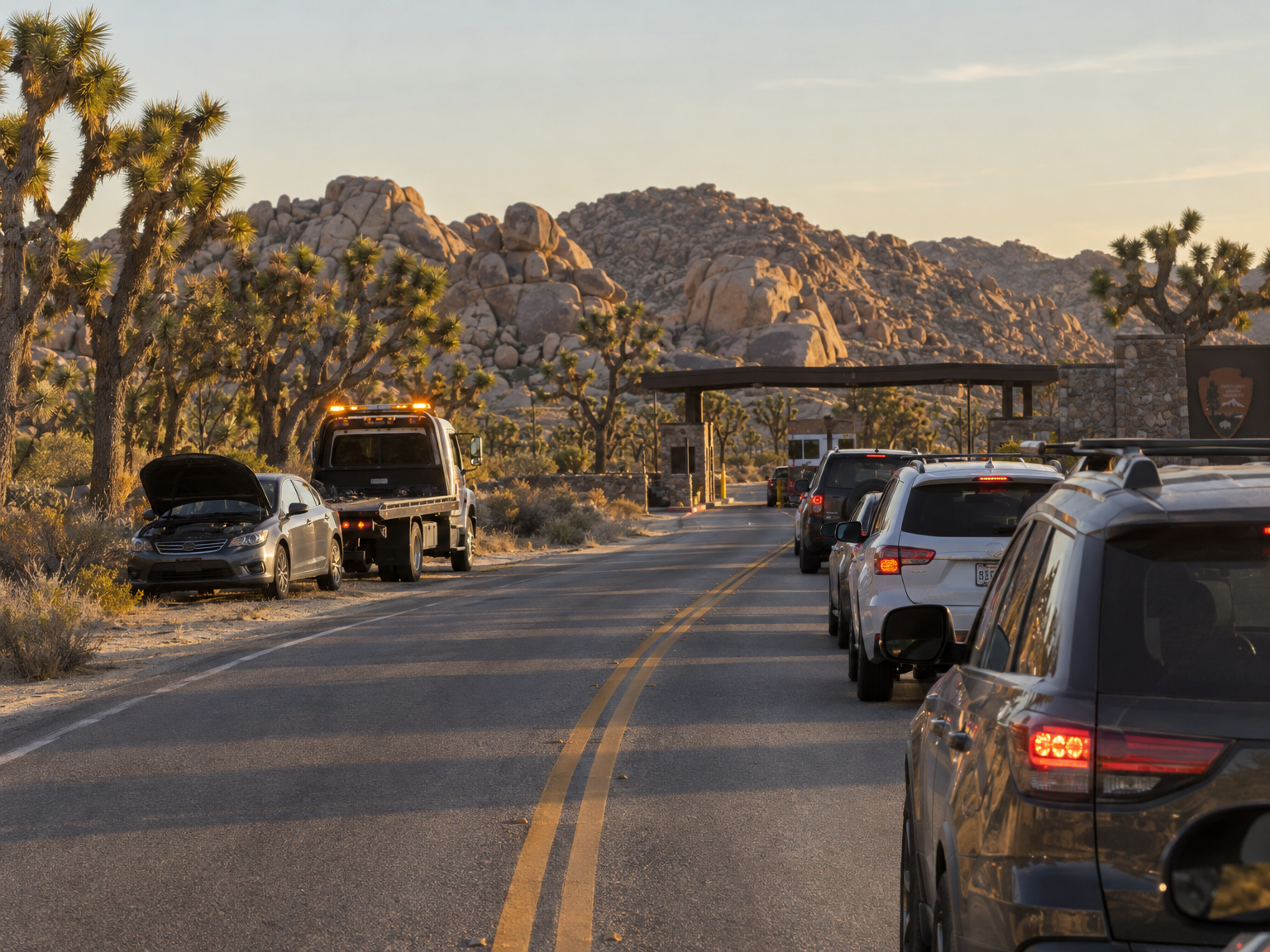
- Joshua Tree National Park. NPS alerts listed Geology Tour Road closed by flooding, the Oasis of Mara Trail closed past the oasis because heavy flooding caused severe erosion, and the 49 Palms Oasis Trail closed.
Closures like these change fast, and I can't tell you what's open the day you read this. Check Caltrans QuickMap before any trip east toward Rice, Vidal, Parker, or Lake Havasu, and the Joshua Tree National Park website before heading into the park.
Driving after a desert storm
The danger doesn't end when the rain does.
- Sand, silt, and gravel on the pavement. Flooding pushes debris onto roads, and it can make a dry-looking surface slick. Slow down in low spots.
- Washed-out shoulders and edges. Floodwater can undercut the road's edge. Stay toward the middle of your lane where you can.
- Debris in the road. The National Park Service warns that floodwaters can carry large debris like tree trunks and boulders, and they can end up anywhere along a wash.
- Wildlife. Tortoises often come out after a rain and can look like rocks in the road, and the NPS recommends checking under your vehicle before you drive away.
- Dirt roads that aren't safe yet. The NPS notes dirt roads can close with no notice after storm damage, and a road that was firm last month can be soft now.
How deep is too deep
The National Weather Service's flood-safety guidance is blunt: never drive through flooded roadways, because you can't know what the road looks like under the water. Its depth figures:
- 6 inches of moving water reaches the bottom of most passenger cars and can cause loss of control and stalling.
- 12 inches of moving water can carry off a small car.
- 18 to 24 inches of moving water can carry away larger vehicles, including SUVs and pickups.
Out here, a wash that's a dry sand trench in the morning can be a flowing channel by afternoon. See the NWS Turn Around, Don't Drown campaign, and the NPS flash flood guidance.
If your car was in water
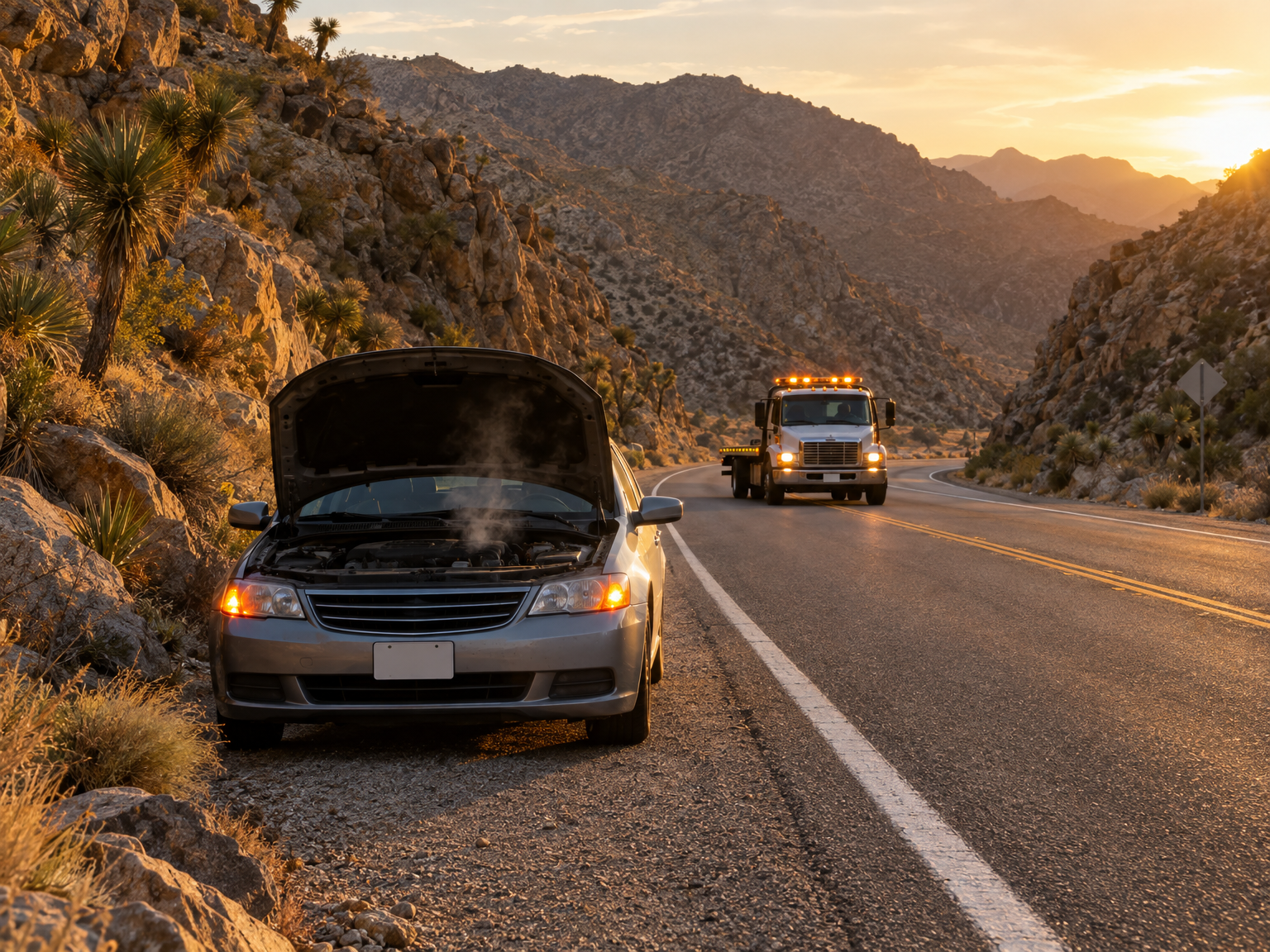
- Don't restart the engine. If your car stalled in floodwater, water may have been drawn into the engine, and cranking it can cause serious damage (a condition called hydrolock). Leave it off.
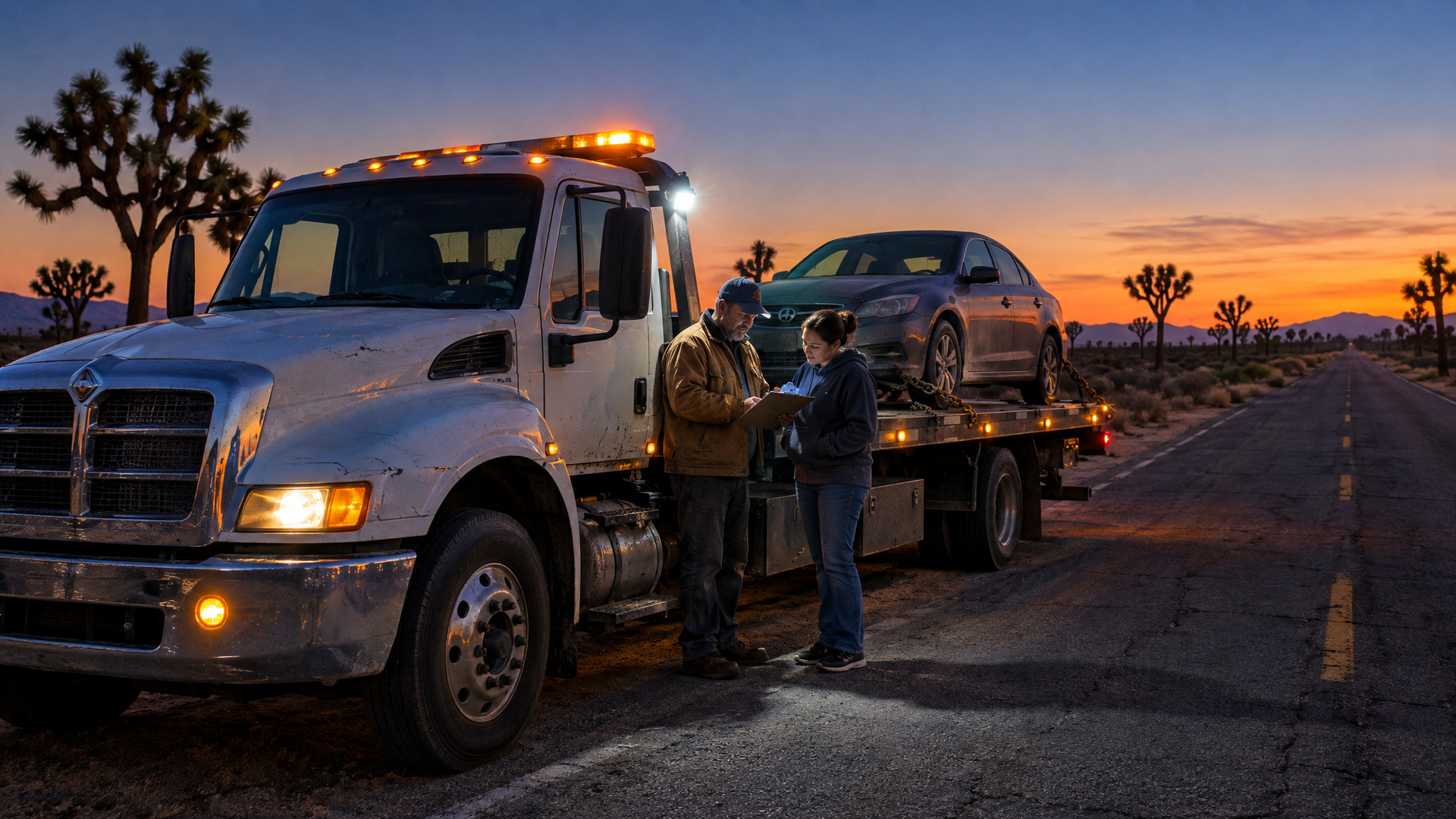
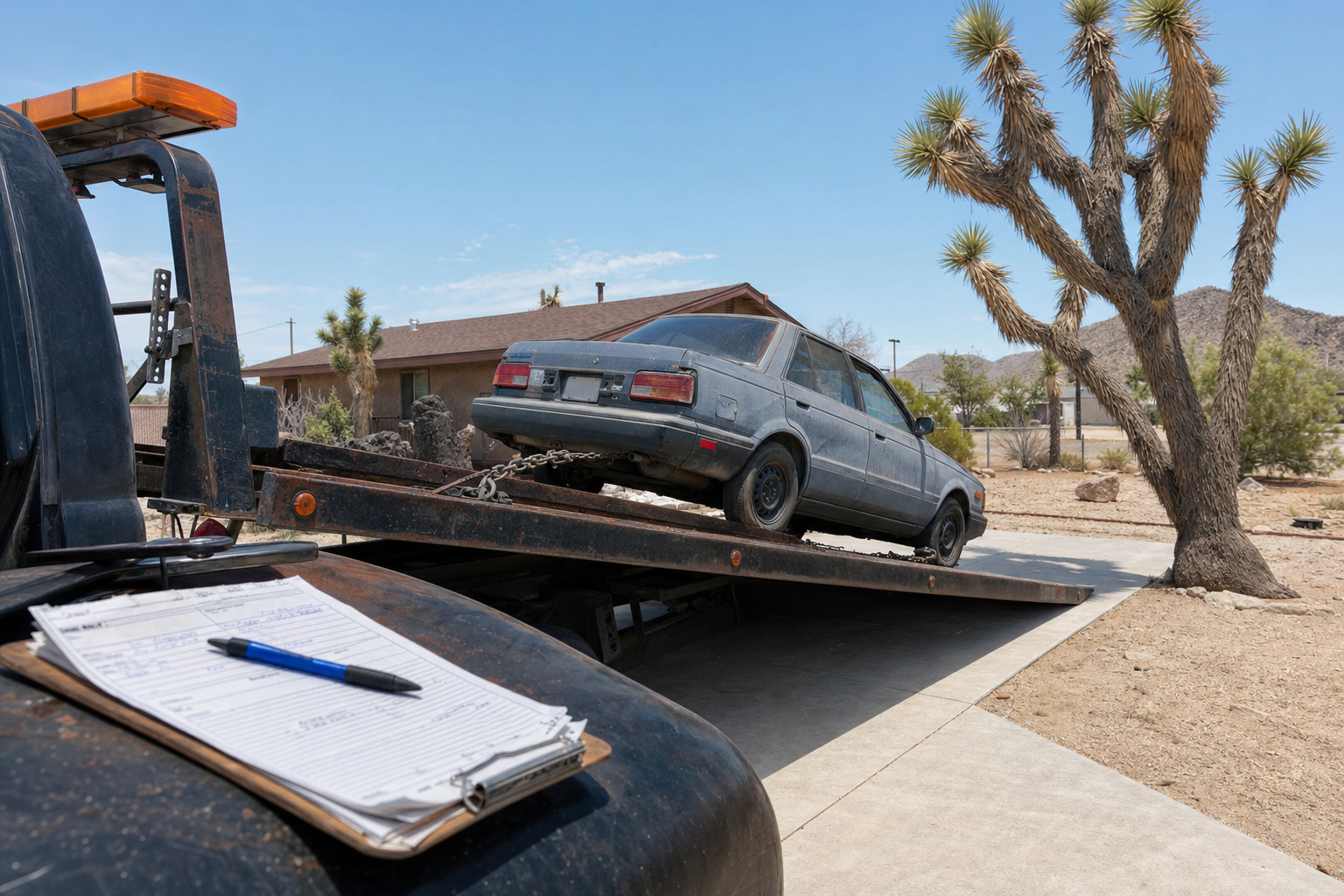
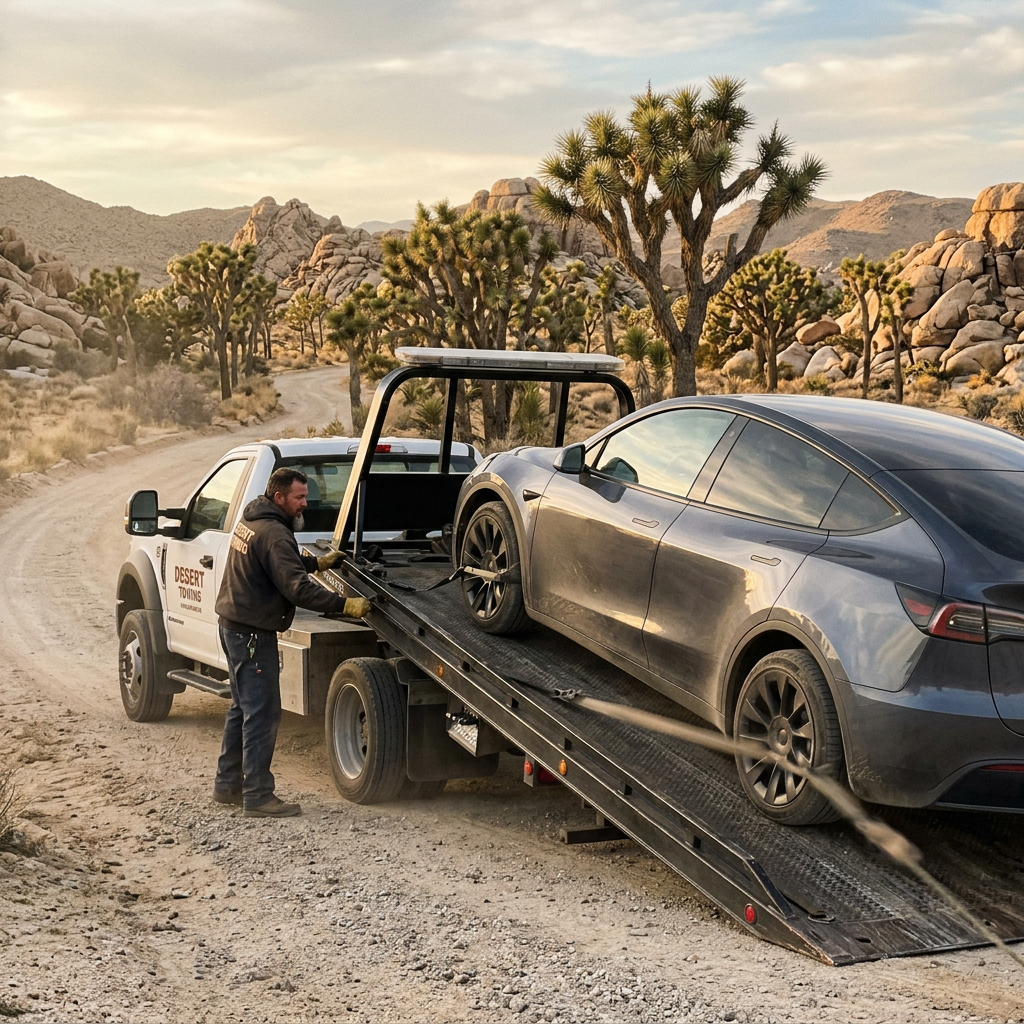
- Get it towed, not driven. A flatbed lets a technician check the engine, fluids, and electrical system before it runs again.
- Be extra careful with EVs. Flooded electric vehicles are a special case, and fire officials and manufacturers recommend keeping them away from garages and chargers until they've been checked. See our guide to towing Teslas and EVs near Joshua Tree.
- Take photos and keep records. Document the water level, the road, and the damage before anything is moved.
If you're stuck in a wash or soft sand
- Stay with the vehicle unless water is rising, and don't walk through moving water.
- Don't try to power out of deep, wet sand, because spinning the wheels digs you in deeper. Our guide to off-road winch-out recovery explains what recovery involves.
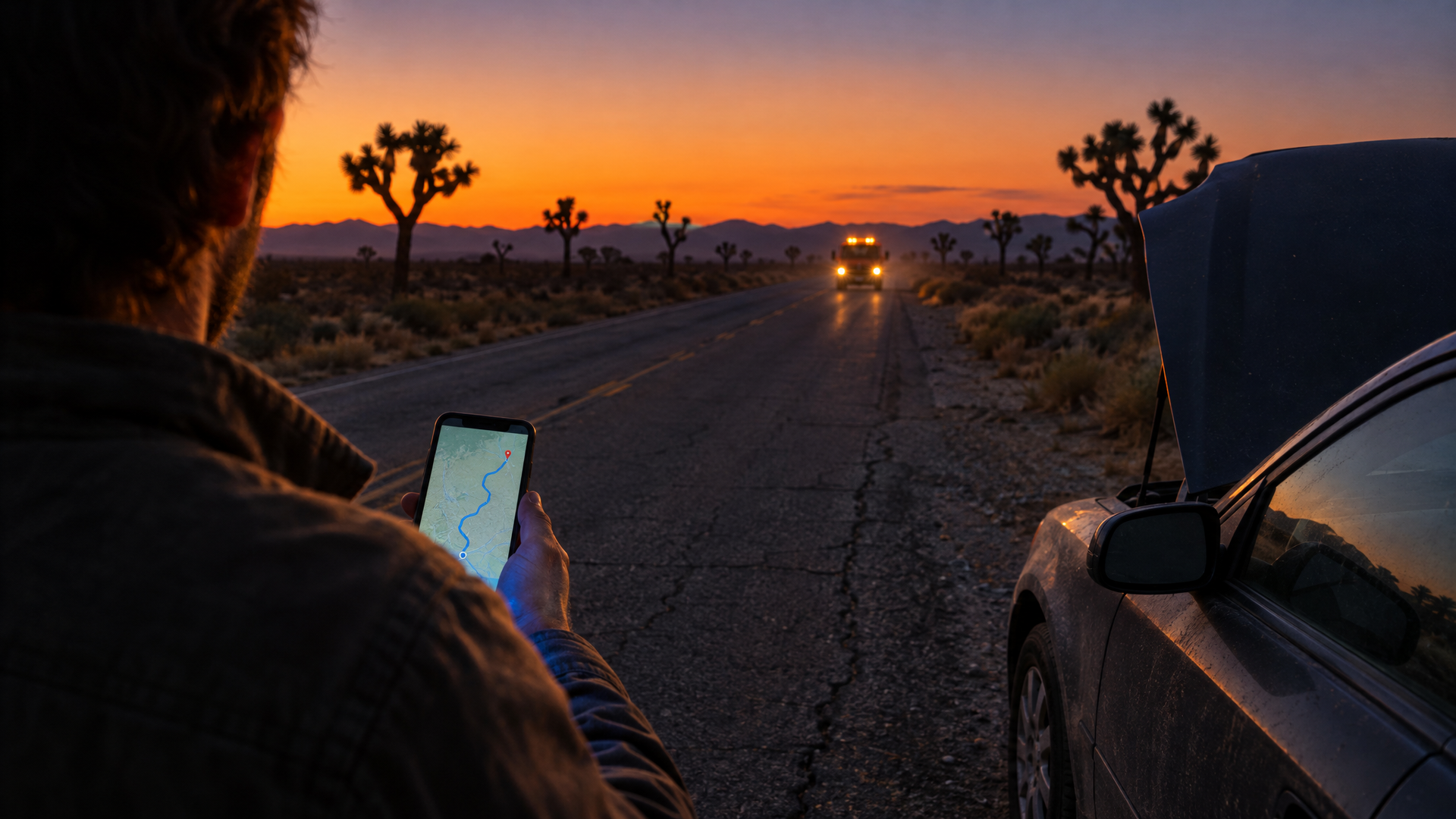
- Give the dispatcher your exact location. Road names, cross streets, and landmarks matter more than ever when roads are closed. Our after-dark breakdown guide has the details.
Know what your tow should cost
After a storm, calls spike and prices can come up in conversation. Before the truck loads, ask for the rate and what it covers, and see our guide to what a California tow invoice must show. If you have a motor club, our guide on AAA or a local tow truck explains how far your plan may take you.
Questions about driving after the storm
Is Highway 62 east of Twentynine Palms still closed?
As of October 18, Caltrans data still showed it closed from Godwin Road to the SR 177 junction. Conditions change, so check QuickMap before you go.
How much water can a car handle?
Less than most drivers think. According to the National Weather Service, 6 inches can cause loss of control and stalling, and 12 inches of moving water can carry off a small car. Turn around and go another way.
My car stalled in water. Can I try to start it?
No. Restarting a stalled engine can pull water into the cylinders and cause serious damage. Have it towed.
Stuck, stalled, or stranded near Twentynine Palms, Joshua Tree, or anywhere on Highway 62?
Call (442) 205-6198 now.
You'll reach a real local dispatcher, not a national call center, and our licensed, insured drivers cover the Morongo Basin 24/7. Ask for a free quote.